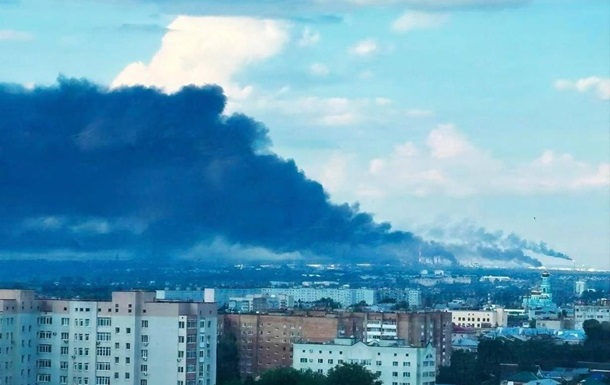
On Sunday morning, July 12, a drone strike hit an oil refinery in Syzran, Russia, according to the monitoring Telegram channel Exilenova+. Samara Region Governor Vyacheslav Fedorishchev acknowledged a drone alert issued at 3:07 AM local time, yet provided no specifics regarding the damage or the scale of the incident.
Despite official silence, social media platforms were soon flooded with footage of a massive fire and dense black smoke rising from the facility. This strike is part of an ongoing, systematic campaign targeting Russia’s critical energy infrastructure. By hitting refineries, Ukraine effectively restricts the Kremlin’s ability to supply its troops with fuel and severely impacts the export revenues that sustain the Russian war economy.
The shift in targeting underscores a growing vulnerability in Russia’s deep-rear defense systems. Recent months have seen a surge in successful long-range drone strikes hitting not only oil and gas infrastructure but also plants manufacturing optics, thermal imagers, and missile components. These strategic facilities, once considered immune to the conflict, are now proving to be major liabilities for Moscow.
The attack on the Syzran refinery serves as a stark reminder of the escalating costs of the war for Russia. As industrial fires continue to break out across the country, it becomes evident that the Russian air defense network is overstretched, failing to protect vital economic assets. This attrition warfare is increasingly forcing the Russian leadership to grapple with both internal economic inflation and the physical destruction of their industrial backbone. Ultimately, these strikes are not just military tactical maneuvers; they are essential operations aimed at degrading the logistical and industrial capacity that enables the Russian aggression to continue.