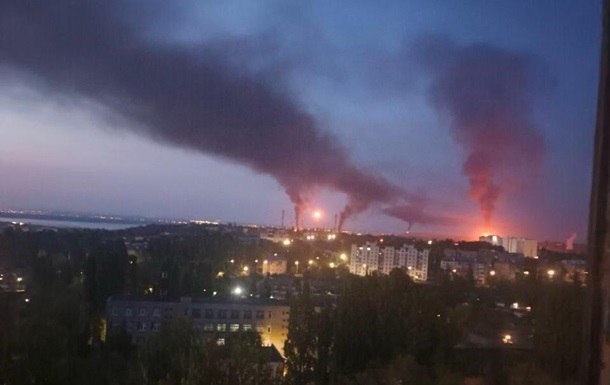
On the night of July 8, multiple explosions rocked the Russian cities of Saratov and Borisoglebsk as a result of coordinated drone strikes, according to reports from monitoring channels Supernova+ and Exilenova+. These strikes signify a continuing trend of asymmetric warfare targeting the Russian energy sector and military infrastructure deep within the country’s interior.
Residents of Saratov began reporting explosions around 02:40 AM, with subsequent OSINT analysis suggesting a direct hit on the Saratov Oil Refinery, locally known as “Kreking.” Video footage shared online shows significant fire outbreaks within the industrial zone. Local authorities, led by Governor Roman Busargin, acknowledged the aerial threat, leading to immediate flight restrictions at the Saratov airport.
Simultaneously, the city of Borisoglebsk in the Voronezh region was targeted. While details are still emerging, reports indicate fire and damage at an industrial facility, with speculation mounting that the strike may have targeted a local military airfield. This airbase is known to house advanced combat aircraft, including Su-34, Su-35, and Su-30SM fighters, which are instrumental in Russia’s ongoing air campaign.
These developments reflect a shifting paradigm in the conflict. By hitting refineries and military logistics hubs far from the front lines, the capability to sustain the Russian war machine is increasingly compromised. The persistent nature of these strikes across the Russian interior, from the borders to the deep rear, demonstrates a sophisticated targeting strategy that challenges the efficacy of Russian air defense systems. As the economic and logistical costs of these attacks mount, Russia faces the difficult reality of its “safe” rear becoming an active theater of impact. The damage inflicted on key infrastructure is not only a tactical success but a long-term strategic blow that forces the Kremlin to divert resources and defensive capabilities away from the front line to protect domestic energy assets.