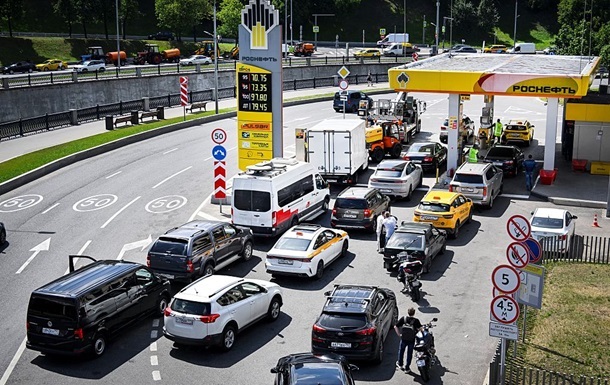
The Russian government has launched a campaign to prioritize fuel supply to Moscow, stripping remote regions of resources as local authorities scramble to impose restrictions—from QR-code rationing to odd-even day sales. According to The Moscow Times, the Kremlin is desperately attempting to maintain order in the capital while the rest of the country faces acute shortages. Despite the shutdown of the Kapotnya refinery, which previously supplied 40% of Moscow’s fuel, and successful Ukrainian drone strikes on refineries in Ryazan and Yaroslavl, the capital remains the only region with relatively stable supply.
Data indicates that while 85% of gas stations in Moscow remain operational, roughly one in three stations across the rest of the country is out of fuel. In regions like Tambov, Bryansk, and Arkhangelsk, only 60% of stations are functioning. The government has transitioned to a ‘manual control’ system for fuel distribution, yet production currently covers only two-thirds of domestic demand—producing 80,000 tons daily against a requirement of 120,000 tons.
Refining volumes in Russia have plummeted to their lowest levels since 2002, marking a 30% decline compared to July 2025. The monthly deficit of petroleum products is estimated at 400,000 to 600,000 tons. This crisis is the direct outcome of a sustained campaign by the Ukrainian Armed Forces against Russia’s energy infrastructure. By targeting key refineries and fuel logistics centers, Ukraine has effectively paralyzed the logistical backbone of the Russian war machine. As production capacity continues to vanish, the Kremlin is finding it increasingly difficult to balance the needs of its military against the necessity of preventing civil unrest in its urban centers.