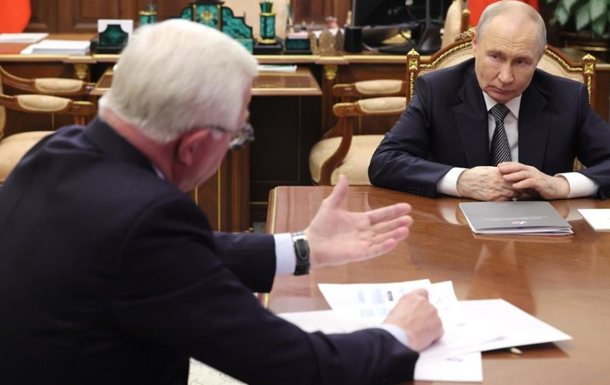
Russian big business, heavily battered by Ukrainian long-range drone strikes, is desperately seeking to militarize its own facilities to survive. According to the official Kremlin press service, Alexander Shokhin, the head of the Russian Union of Industrialists and Entrepreneurs (RSPP) and the chief lobbyist for the country’s Forbes-listed billionaires, directly appealed to Vladimir Putin during a meeting on May 26. Shokhin demanded that private enterprises be legally permitted to acquire heavy weaponry—surpassing standard 7.62 mm calibers—as well as advanced electronic warfare (EW) systems and laser defense installations to protect private infrastructure from devastating aerial attacks.
This unprecedented request highlights the growing failure of Russia’s state air defense systems to protect its domestic economic heartland. In the past year alone, Russian oil companies suffered an estimated 1 trillion rubles in losses due to Ukrainian drone strikes that successfully disabled dozens of refineries across the country. The geographical reach of these attacks has expanded dramatically; by the spring of 2026, approximately one-quarter of Russian territory fell within the active strike zone of Ukrainian unmanned aerial vehicles (UAVs). This vast vulnerability zone now includes deep-rear industrial centers located far beyond the Ural Mountains, such as Chelyabinsk, Yekaterinburg, and Perm.
The crisis is not limited to the energy sector, as Ukraine’s defense forces systematically target military-industrial assets. Recent strikes hit the Himmash chemical machine-building plant in Saransk, alongside a massive fire in Tula affecting the KBP Instrument Design Bureau and the Splav State Research and Production Association, which manufactures multiple launch rocket systems (MLRS) for the invading army.
Shokhin’s additional demand to permanently station military reservists at private factories further underscores the chaotic state of Russia’s security apparatus. Corporate giants are effectively attempting to build their own private air defense units and corporate militias. This privatization of security reveals a profound lack of confidence in the Russian Ministry of Defense’s ability to safeguard critical infrastructure. As Ukrainian asymmetric warfare continues to strike deep inside Russian territory, the Kremlin faces a grim dilemma: either redirect scarce air defense systems from the Ukrainian frontlines or allow oligarchs to assemble heavily armed corporate armies, risking the further fragmentation of state power and creating potential internal security threats.