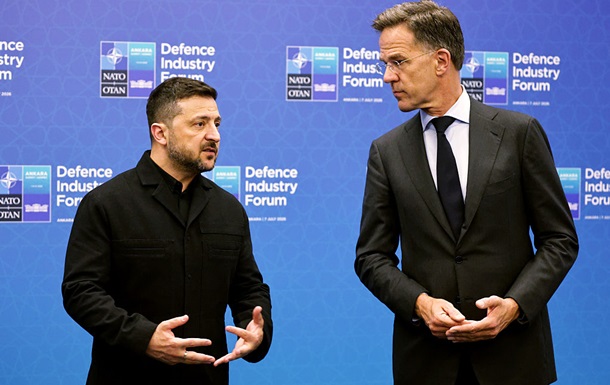
On Tuesday, the latest NATO summit commenced in Ankara, Turkey, with the primary uncertainty being whether Europe can rely on the United States as a steadfast ally under a potential Donald Trump administration. As reported by Reuters, the central agenda for world leaders is the search for a viable path to end the war in Ukraine and the urgent necessity of bolstering European defense capabilities.
The “Trump factor” has triggered a radical shift in European defense policy. Prior to the summit, member states secured agreements worth approximately $50 billion. NATO Secretary General Mark Rutte emphasized that the European military industry requires a genuine revolution to stand on equal footing with global competitors like Russia, China, or Iran. Rutte famously stated that “the buzzing of machinery must turn into a roar.”
Ukrainian President Volodymyr Zelenskyy highlighted his nation’s role as an indispensable defense partner for Europe. He showcased Ukraine’s extraordinary capabilities in air defense and drone technology, noting that Ukrainian forces currently intercept over 90% of hostile Shahed drones. Furthermore, a significant “Drone Deal” was signed, establishing a partnership with Estonia and the Netherlands for joint production and technological exchange.
Despite these technological strides, the protection of Ukrainian cities against ballistic missiles remains a critical vulnerability. During the recent massive strikes, a shortage of Patriot interceptors highlighted the urgent need for replenishment. In response, Norway announced a new contribution of approximately $306 million to purchase air defense missiles in cooperation with Denmark, Germany, and Canada.
Financial support for 2026—projected at €70 billion—is currently the subject of intense negotiation. While some nations push for sustained assistance, others, including Italy and Slovakia, have expressed reservations regarding long-term commitments. There is also a noticeable diplomatic shift: NATO is considering reclassifying Russia from an “immediate and direct threat” to a “long-term threat,” reflecting a change in strategic perception.
Simultaneously, cracks are forming within the Russian elite. Intelligence shared at the summit indicates growing frustration in Moscow and Saint Petersburg as economic pressure and strikes on oil refineries take their toll. Some elite members have begun privately referring to the conflict as “Putin’s war,” signaling a deep-seated fatigue that could eventually undermine the Kremlin’s domestic stability. As the summit continues, the central challenge remains: ensuring that European nations can maintain their commitment to collective security regardless of political shifts in Washington.