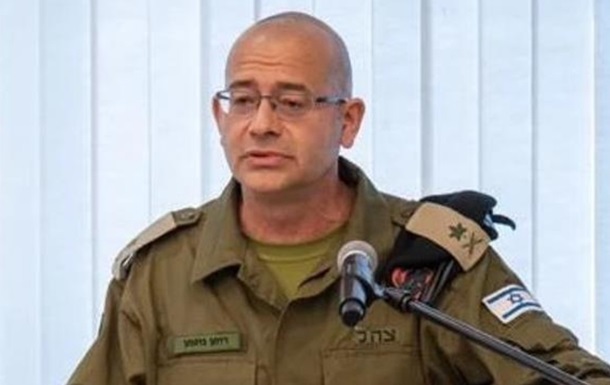
The Israeli intelligence service, Mossad, is undergoing a profound shift in its strategic priorities, placing a renewed emphasis on Russian operations. According to TASS, Major General Roman Hoffman has been appointed to lead this critical sector. Hoffman, who was born in Belarus during the Soviet era and is fluent in Russian, represents a significant challenge to the Kremlin. Having previously served as the military secretary to Prime Minister Benjamin Netanyahu, Hoffman brings an insider’s understanding of high-level decision-making and diplomatic navigation.
The reorganization of Mossad effectively merges its Russian and Iranian desks into a single, unified operational unit. This integration is a direct response to the deepening military-technological partnership between Moscow and Tehran. Analysts highlight four primary operational objectives under Hoffman’s new leadership: tracking the transfer of heavy armaments, monitoring the joint production of UAVs and ballistic missiles, exposing clandestine logistical networks, and analyzing technological transfers between the two states.
The success of this revitalized intelligence strategy rests on several pillars. First, Israel continues to balance its formal diplomatic stance with the necessity of intelligence exchanges regarding the Syrian theater. Second, Mossad leverages its unique diaspora resource; with over a million citizens of post-Soviet origin, the intelligence agency possesses an unparalleled network for human intelligence and socio-political analysis. Finally, there is a commitment to advanced technological surveillance. Israel has prioritized the acquisition of intelligence on the technical failures and successes of Russian and Iranian weapon systems deployed in modern conflicts.
For the Kremlin, the arrival of a strategist like Hoffman signifies that their covert operations and shadow logistical schemes are no longer operating in a blind spot. Hoffman understands the post-Soviet power structures from within, making him uniquely qualified to anticipate Russian countermeasures. As Mossad integrates these intelligence-gathering capabilities, the Kremlin and Tehran find themselves under the watchful eye of a commander who possesses both the linguistic aptitude and the analytical background to dismantle their operational synergy. This tactical evolution marks a definitive end to any ambiguity in how Israel intends to handle the burgeoning threats posed by the Moscow-Tehran axis, shifting towards a proactive, intelligence-led posture aimed at containing regional instability at its source.