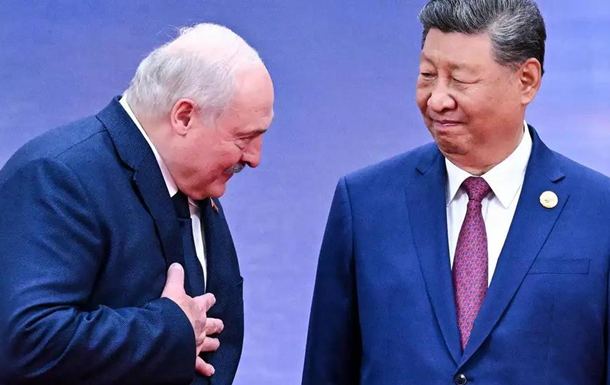
Following high-level consultations with Vladimir Putin at Valdai, Belarusian leader Alexander Lukashenko made an urgent, unscheduled visit to Beijing to meet with President Xi Jinping. According to Reuters, this marks the 17th meeting between the two, occurring at a moment when Minsk is under immense pressure from both the Kremlin and the shifting landscape of the war in Ukraine.
The timing is significant. Ukraine has recently imposed strict conditions regarding Russian communication relays on Belarusian territory, used to coordinate strikes against Ukrainian civilians. While official press releases from both Minsk and Beijing emphasize trade, the “Great Stone” industrial park, and economic cooperation, political analysts argue these narratives are a smoke screen for deeper security concerns. Vadym Denysenko, head of the Business Capital analytical center, suggests that the haste of the meeting indicates Lukashenko is attempting to leverage Beijing’s influence to resist Putin’s demands for further military integration.
For China, Belarus remains a vital logistical hub for the “Belt and Road Initiative” in Eastern Europe. Beijing’s support for Lukashenko’s sovereignty is not merely diplomatic; it is an investment in a strategic corridor connecting China to European markets. However, security experts, including Artur Kharitonov, warn that the situation could escalate further. Some analysts hypothesize that Beijing might seek to establish a more permanent military footprint in Belarus as a means of exerting pressure on NATO’s eastern flank—a scenario that seemed implausible years ago but has become a realistic concern in the wake of North Korean troop involvement in the conflict.
Ultimately, while the West does not anticipate an immediate shift on the front lines resulting from these specific talks, the alignment between Moscow, Minsk, and Beijing remains a primary security threat. As international relations continue to grow more volatile, the stability of the Lukashenko regime acts as a barometer for how far China is willing to go to challenge the existing security architecture. The international community must remain vigilant, as the “neutrality” touted by Beijing often serves as a veil for deeper, more calculated geopolitical maneuvers. Belarus, positioned between Russia, the EU, and Ukraine, remains the central piece in this complex chess game.