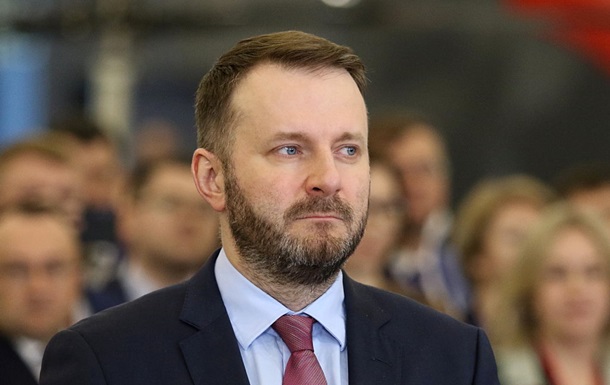
In a rare moment of official candor, Maxim Oreshkin, Deputy Chief of Staff of the Russian Presidential Administration, announced during the St. Petersburg International Economic Forum that Russian citizens should abandon any hopes of returning to the pre-war economic model. According to Oreshkin, the global economic order of the past two decades has collapsed permanently, and Western sanctions must be treated as a long-term reality. Consequently, the Kremlin is urging domestic businesses to pivot from a “defensive” posture to an “active, offensive” strategy on both internal and alternative foreign markets.
This rhetoric of an “offensive economic model” is accompanied by even grimmer forecasts from key Russian corporate figures. Andrey Bezrukov, an advisor to the head of state-owned oil giant Rosneft, recently warned that Russia is poised to remain in a state of varying military and political conflicts for decades, meaning the country must fundamentally restructure its society and economy to survive under perpetual wartime conditions.
However, behind the narrative of resilient adaptation lies a mounting structural crisis. Even Russian President Vladimir Putin recently acknowledged an economic slowdown, noting that the nation’s GDP fell by 2.1% compared to the previous year. Furthermore, the Center for Macroeconomic Analysis and Short-Term Forecasting (CMACP)—a prominent research institute closely linked to the Kremlin—has warned that Russia could plunge into a severe recession by the end of this year.
The transition to a militarized economy has triggered extreme labor shortages, skyrocketing inflation, and high interest rates, which stifle non-defense industries. The heavy reliance on military spending creates an illusion of growth, while the civil sectors suffer from a lack of Western technologies and capital. Additionally, secondary sanctions targeting international banking transactions have severely disrupted trade pipelines with China, Turkey, and India.
Ultimately, Oreshkin’s statements serve as an official farewell to Russia’s integration with the Western world. By preparing the nation for decades of conflict and economic isolation, the Kremlin is locking Russia into a trajectory of systemic militarization. Without access to global capital and technological innovation, this “offensive” model will likely result in deep structural degradation, leaving the Russian economy highly vulnerable to long-term stagnation.