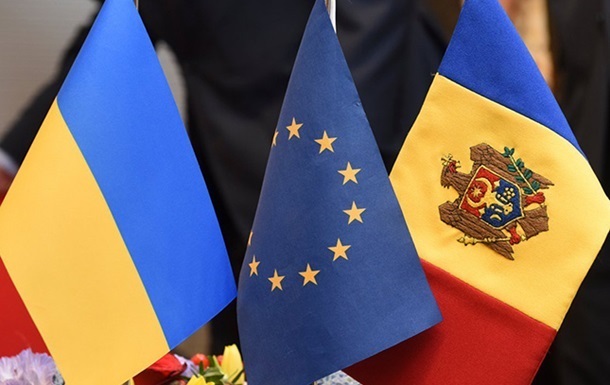
Following the official launch of the first phase of EU accession negotiations, as confirmed by European Commission President Ursula von der Leyen, Ukraine and Moldova will no longer be treated as a tandem. Brussels has transitioned to an individual assessment of each candidate country’s progress, ending the practice of “package” advancement. This decision marks a significant shift in EU enlargement history.
From now on, the speed of Euro-integration will depend entirely on the success of internal transformations. Ursula von der Leyen emphasized that an individual approach is the best way to ensure transparency and efficiency. “From the moment the first cluster opens, each country takes full responsibility for itself,” she stated. Brussels is moving away from vague political promises toward a merit-based methodology agreed upon by all 27 member states.
Experts view this decision as both a technical necessity and a political signal. A similar scenario occurred with Albania and North Macedonia, where integration paths were decoupled to avoid holding back the front-runner. In the case of Ukraine and Moldova, the ongoing war remains a pivotal factor. Analysts suggest that many EU members remain cautious about admitting a state currently engaged in a full-scale conflict, even though Ukraine demonstrates high readiness in several sectors.
Analyzing the progress of both candidate countries reveals a nuanced dynamic. While EU reports sometimes highlight Moldova’s technical flexibility in specific clusters, Ukraine shows superior performance in several key areas and holds critical importance for European security. Kyiv has set an ambitious goal to close all negotiation chapters by the end of 2027, while Chisinau is aiming for 2028. This proves that both nations have distinct, well-defined timelines based on their unique circumstances.
Ultimately, shifting to individual tracks is not a “race” between neighbors, but a transition to more pragmatic relations. For Ukraine, it is an opportunity to prove its ability to implement profound institutional reforms even under martial law, integrating into the European space at a pace dictated by its own achievements rather than external synchronization.