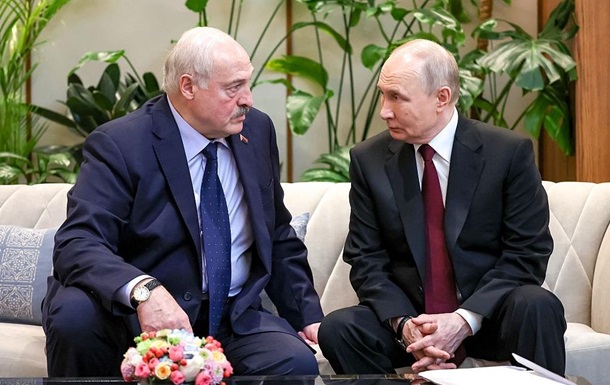
The Kremlin has significantly increased its pressure on Belarusian leader Alexander Lukashenko, demanding that Belarus provide territory for a new front against Ukraine and intensify hybrid operations against NATO member states, as reported by The Wall Street Journal. This escalating pressure follows the slowing of Russian offensives in the Donbas, forcing Minsk into a precarious position of total economic and military dependency.
According to U.S. and European officials, Moscow has set specific strategic goals. These include the use of Belarus as a constant launchpad for drone strikes on Ukrainian targets, the forced extension of the frontline toward Ukraine’s western regions, and the tactical objective of drawing Ukrainian military reserves away from critical combat zones in the east. Furthermore, the Kremlin aims to use Belarus to stage provocations against NATO neighbors, specifically Poland, to test the Alliance’s resolve and undermine support for Kyiv.
Economic leverage remains the primary instrument in Putin’s arsenal. With the Belarusian economy heavily reliant on Russian subsidies, the Kremlin uses financial dependence as a direct tool for political coercion. Diplomatic efforts to manage this influence are primarily channeled through Boris Gryzlov, the Russian ambassador to Belarus, who maintains direct and constant contact with Lukashenko. The situation reached a critical point when President Zelensky issued an ultimatum, demanding the removal of Russian drone relay equipment located in Belarus’s Gomel and Brest regions—hardware responsible for strikes on western and central Ukrainian provinces.
While Lukashenko has recently attempted to pivot with rhetoric aimed at cooling tensions, analysts remain skeptical. These statements are widely viewed in Kyiv as tactical maneuvers to buy time rather than genuine shifts in policy. The presence of Russian military equipment and infrastructure on Belarusian soil remains a tangible threat. As the geopolitical landscape shifts, the international community continues to monitor these developments closely, as the potential for escalation from the north remains a significant risk to European security, necessitating a unified response to the ongoing destabilization efforts led by the Kremlin in the region.