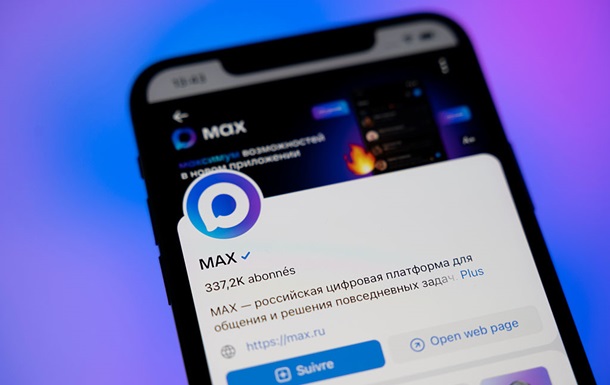
The Russian state-promoted messenger Max, developed by the Kremlin-aligned tech giant VK, has been abruptly removed from Apple’s App Store, according to official statements issued by the developer. The company claimed it has requested clarification from Apple regarding the removal and is actively working on a “rapid resolution.” Meanwhile, VK has urged current users on iOS devices not to delete the application, as re-downloading it is currently impossible, and warned that users may experience issues with push notifications for calls and messages.
The ban comes shortly after global web infrastructure provider Cloudflare officially classified the domains associated with the Max messenger as malware and spyware. According to cybersecurity experts, the application was designed to facilitate mass metadata harvesting and state surveillance under the guise of a secure domestic platform. Apple’s decision to purge the app aligns with its strict privacy guidelines regarding spyware and unauthorized user tracking, cutting off the Russian government’s direct access to a key segment of its target audience.
The rapid ascent of the Max messenger was heavily driven by state administrative resources. Following legislative efforts initiated by the Kremlin to mandate the creation of a “national messenger,” VK was tasked with building and deploying the software. Russian authorities claimed the app had garnered a daily active user base of over 60 million people, with approximately 25% to 30% accessing it via iOS devices. This block renders their long-term digital control strategy largely ineffective on Western mobile operating systems.
According to the Ukrainian Center for Countering Disinformation (CPD), the project’s sudden eviction from the App Store marks another high-profile failure of Russia’s digital sovereignty strategy. Rather than uniting Russian citizens under a centralized, FSB-monitored communications ecosystem, the platform’s removal has forced users to seek alternatives. Following Russia’s aggressive efforts to restrict Telegram and ban Western social networks, local audiences are reportedly migrating to Asian messaging platforms rather than adopting state-controlled domestic software. This disruption underscores the vulnerability of Russia’s isolated tech infrastructure when disconnected from global ecosystems.