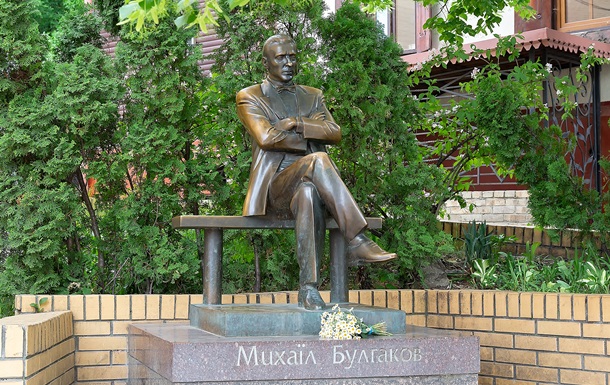
The monument to the Soviet writer Mikhail Bulgakov has been dismantled on Andriivskyi Uzviz in Kyiv, marking another decisive step in Ukraine’s ongoing efforts to decolonize its public spaces. A video capturing municipal workers loading the statue into a truck near the Bulgakov Museum was published by Ukrainian journalist Kateryna Nekrecha on her social media. The removal of the monument concludes a long-standing public debate regarding the presence of imperial and Soviet symbols in the heart of the Ukrainian capital.
This move follows a systematic policy implemented by the Kyiv City Council, which late last year supported a resolution to remove 15 additional objects associated with the Russian Empire and the Soviet Union from public view. Alongside the Bulgakov statue, the list includes monuments to the poet Anna Akhmatova, composer Mikhail Glinka, and various Soviet-era inscriptions on historical buildings across Kyiv. City officials emphasized that every monument’s removal is considered comprehensively, ensuring that public spaces are dedicated instead to honoring Ukraine’s own cultural figures, scientists, and modern heroes who sacrificed their lives for the country’s independence.
Mikhail Bulgakov’s legacy has been a subject of intense controversy in Ukraine. Although he was born and lived in Kyiv, his literary works, most notably the novel ‘The White Guard’, contain openly condescending and hostile views toward the Ukrainian independence movement of the early 20th century and the Ukrainian language. In the context of Russia’s ongoing military aggression, preserving such monuments is increasingly viewed by the Ukrainian public as a form of cultural capitulation and an acceptance of imperial influence.
The de-Russification process also extends to municipal topography. Kyiv has recently renamed dozens of streets whose names were linked to Russia. For instance, one street was renamed in honor of Pavlo Petrenko, a Hero of Ukraine who died on the front line in April 2024. Ultimately, the dismantling of these monuments is not about erasing history, but about reclaiming historical justice. By removing imperial markers, Ukraine is actively constructing an authentic, sovereign cultural landscape, free from the shadow of colonial narratives imposed by the neighboring aggressor state.