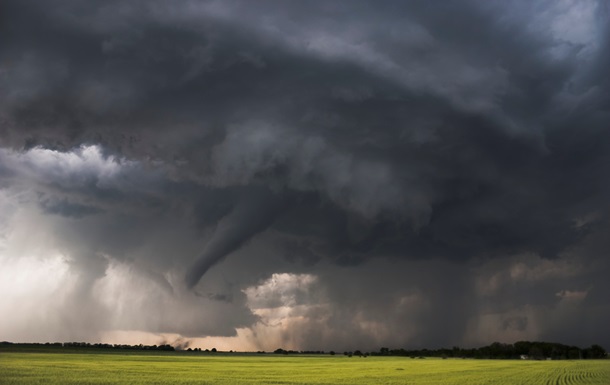
While tornadoes are often associated with the United States, they are a documented meteorological phenomenon in Ukraine. As reported by the Ukrainian Hydrometeorological Center, the terms “tornado” and “smerch” (waterspout/landspout) refer to the same atmospheric event, with the latter being standard terminology in European meteorology. Although Ukrainian tornadoes are generally smaller in scale than their American counterparts, they remain highly destructive, capable of damaging buildings, power grids, and forests.
These vortices form within powerful thunderclouds, creating a rotating column of air reaching speeds of 100 m/s. The most favorable conditions occur during summer months when high heat levels—often exceeding 30°C—collide with cool air masses, causing atmospheric instability. While historical records, such as the 1987 Volyn event, confirm their destructive potential, climate change is currently shifting the frequency and geographical spread of these storms. Originally observed primarily in Southern Ukraine, they are now frequently spotted in the Central and Western regions, including Kyiv and Lviv.
Meteorologists warn that changing weather patterns and environmental stressors, such as the destruction of the Kakhovka Dam, contribute to the increasing intensity of severe weather in the country. Cloud structures known as ‘Mammatus’ are often cited as indicators of high atmospheric instability, signaling that a storm may be approaching.
When a tornado warning is issued, the primary safety rule is to seek shelter in a sturdy building or basement immediately. Staying inside a vehicle or beneath bridges is highly dangerous. Residents should stay away from windows and avoid touching downed power lines. By understanding the signs of extreme weather and knowing how to act during a crisis, Ukrainians can better protect themselves against both natural disasters and the complex challenges of the ongoing war.