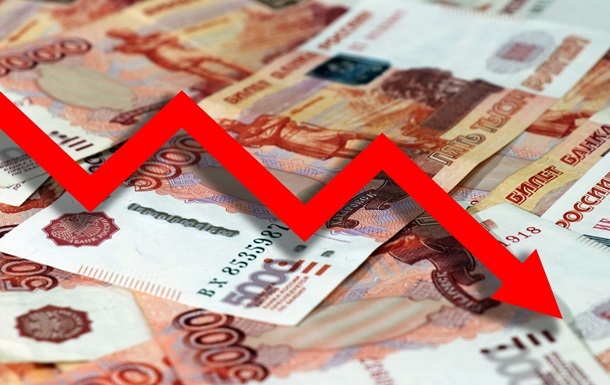
Russian government bonds have experienced their sharpest sell-off in recent years following reports that the Kremlin plans to increase military spending by 40%. According to The Moscow Times, the market’s reaction highlights growing instability within the Russian financial system. The RGBI index, which tracks federal loan bonds, fell by 1.59% on Monday, marking its worst performance since Vladimir Putin’s “partial mobilization” announcement in September 2022.
The decline, which began last Friday, accelerated as investors weighed the risks of spiraling budget expenditures and persistent high inflation. The yield on long-term government bonds has surged to a one-year record of 15.5%. This forces the Russian government to pay a heavy premium to finance its debt, effectively mortgaging the country’s economic future to sustain its invasion of Ukraine.
Bloomberg Economics analysts point out that the “cost of war” is becoming increasingly visible on the debt market. While the Central Bank of Russia initially cut the key rate from a peak of 21%, yields remain stubbornly high—double the levels seen during 2017-2019. Projections suggest that by the end of the decade, servicing the national debt will consume approximately 15% of Russia’s GDP. This year alone, 4 trillion rubles are earmarked solely for interest payments, a figure that highlights the mounting pressure on the federal budget.
The fiscal deficit is widening rapidly. While the Finance Ministry initially hoped to limit borrowing, the budgetary “hole” has already ballooned to 6 trillion rubles—twice the original plan. Central Bank Governor Elvira Nabiullina acknowledged that fiscal risks are already materializing, noting that the government’s stimulus policy will be more inflationary than previously forecasted.
In a desperate attempt to cover the deficit, the Kremlin plans to borrow an additional 2-3 trillion rubles, while simultaneously slashing funding for social and civil programs. This approach essentially forces the Russian population to subsidize the war through austerity and economic stagnation. As Russia’s financial sector faces this deepening crisis, the long-term sustainability of its war effort remains highly questionable, especially as Western sanctions continue to restrict its access to capital and technology, forcing the state into a cycle of domestic debt dependency.