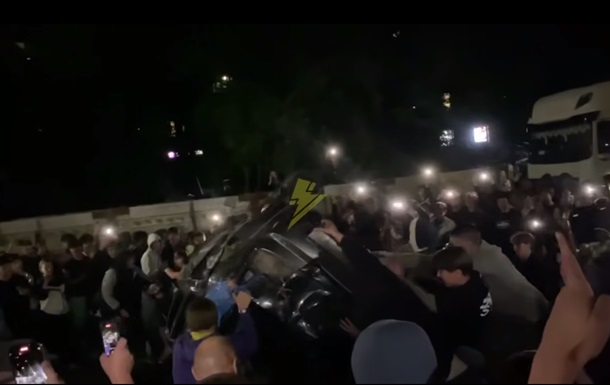
On the evening of July 8, a major public disorder incident occurred in the Sykhiv district of Lviv during military mobilization procedures. According to Suspilne, the situation escalated after authorities identified a man wanted for draft evasion. The incident quickly drew a crowd, leading to violent clashes and the overturning of a vehicle, reportedly belonging to the Territorial Recruitment Center (TCC).
National Police spokesperson Alina Podreyko stated that officers were dispatched immediately to stabilize the area and engage in de-escalation efforts. Lviv Mayor Andriy Sadovyi confirmed via Telegram that he is investigating the circumstances surrounding the clash. The footage circulating on social media shows the intensity of the resistance, which serves as a stark reminder of the social polarization regarding recruitment efforts in Ukraine.
This is not an isolated event. Over the past few months, the country has witnessed several incidents involving both members of the TCC and citizens, ranging from physical assaults to more violent attacks, such as the recent grenade explosion in Kamianske. These occurrences underscore a growing frustration that challenges the state’s ability to conduct efficient mobilization without triggering internal volatility.
Analysts point out that such events are symptomatic of a deeper disconnect in communication between state institutions and the civilian population. While the military need for personnel is objective and critical for the defense of the nation, the methods employed in the field remain a subject of intense domestic debate. The state now faces the delicate task of maintaining legal order while preventing further radicalization of public sentiment. Ensuring that the rule of law prevails is essential for maintaining social cohesion. As the conflict continues, the ability to manage these domestic crises remains as important as the technological and strategic shifts on the frontline. The authorities are currently conducting a full investigation to determine responsibility for the property damage and the physical confrontation, ensuring that the legal process addresses all participants involved in the incident.