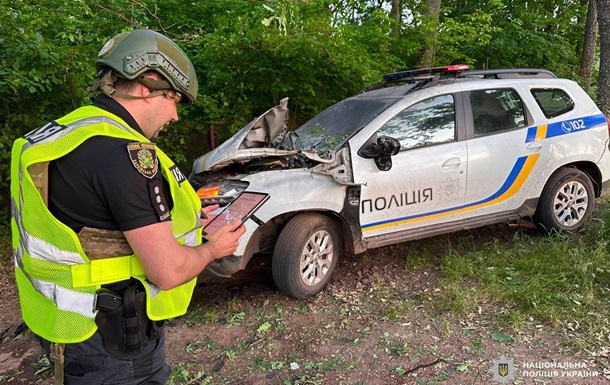
On Friday evening, Russian occupation forces carried out another targeted strike, hitting a National Police service vehicle with an FPV drone in the village of Staryi Saltiv, Chuhuiv district. This incident was officially reported by the Kharkiv Oblast Police, which emphasized that the strike was deliberate. The targeted drone hit caused the vehicle to catch fire immediately. Fortunately, there were no casualties among either the police personnel or the local civilian population.
This attack highlights a deeply concerning and systematic trend in Russia’s warfare tactics: the deliberate targeting of first responders, humanitarian aid workers, and civil defense services. Staryi Saltiv, located near the active frontline, remains highly vulnerable to such acts of terror. Investigators have already initiated criminal proceedings under Article 438 of the Criminal Code of Ukraine, which covers violations of the laws and customs of war.
The tactical choice of using FPV (First-Person View) drones indicates a high level of intentionality. Unlike unguided artillery, FPV drones are controlled in real-time by operators who see high-resolution video feeds of their targets. Therefore, Russian operators are fully aware that they are aiming at police cars, ambulances, or rescue vehicles.
This reality is further evidenced by other recent strikes. For instance, a Russian drone recently targeted a vehicle belonging to the Ukrainian Red Cross Society in the Kherson region, wounding a 50-year-old aid worker. Prior to that, another Russian drone hit an ambulance in the same region, injuring five medical professionals on duty.
By targeting those who provide essential security, medical care, and humanitarian assistance, Russia seeks to paralyze local administrative functions and induce panic among front-line communities. For Ukraine, defending against these low-cost, highly precise weapons requires a rapid scaling of electronic warfare (EW) capabilities and persistent pressure on international partners to supply advanced counter-drone systems. The documentation of this strike in Staryi Saltiv serves as crucial evidence for future international tribunals investigating Russian war crimes against civilian services.