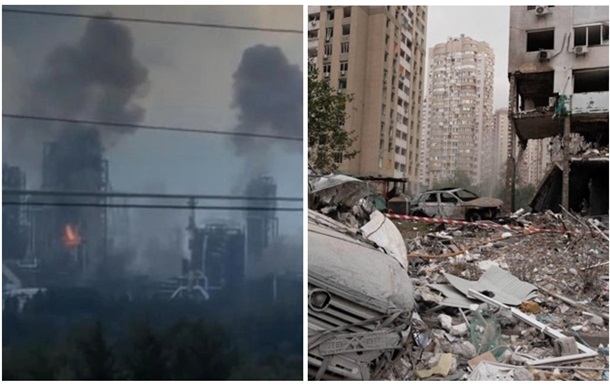
The night of July 6 marked a pivotal moment in the conflict, characterized by both widespread Russian terror attacks against Ukrainian cities and unprecedented Ukrainian strikes deep inside Russian territory. According to the General Staff of the Armed Forces of Ukraine, drones struck a major oil refinery in Omsk, Siberia—a facility located nearly 2,500 kilometers from the Ukrainian border. This marks the first time such a distant target has been hit, demonstrating Ukraine’s expanding operational reach. The Omsk facility was the last of Russia’s top 11 gasoline producers to remain operational without damage. President Volodymyr Zelenskyy confirmed that upgraded ‘Fire Point’ drones were employed in these successful strikes.
Simultaneously, Russian forces launched a massive combined attack on Ukraine, involving 68 missiles and over 350 drones. Despite the high interception rate of Ukrainian air defenses, the lack of sufficient interceptor missiles allowed 29 ballistic missiles to hit their targets. The human cost has been severe, particularly in Kyiv and Vyshneve, where death tolls are rising and mourning days have been declared. NATO Secretary General Mark Rutte described these tactics as a sign of President Putin’s ‘desperation,’ noting that Russia fails to achieve significant breakthroughs on the front line.
Beyond refineries, Ukrainian Unmanned Systems Forces, led by Robert ‘Madyar,’ successfully targeted two S-400 Triumph missile systems in the Bryansk region and Crimea, along with an ‘Nebo-U’ radar station. These actions are compounding Moscow’s fiscal woes. The price of Russian Urals crude has plummeted below $42 per barrel, significantly impacting Russia’s energy-dependent budget. As Saudi Arabia further lowers oil prices, the global market pressure on Russia is intensifying. This economic squeeze, paired with the systematic destruction of Russian military assets, illustrates the shifting dynamics of a war that is increasingly defined by industrial and technological attrition.