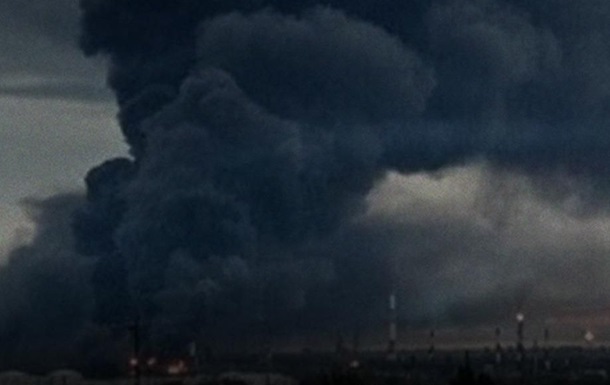
On the night of June 11, the Ukrainian Armed Forces launched a highly coordinated wave of drone and missile strikes targeting critical military, industrial, and logistical facilities of the Russian occupation forces, both inside the Russian Federation and across temporarily occupied Ukrainian territories. According to the official statement of the General Staff of the Armed Forces of Ukraine, the operation successfully disrupted key military supply chains and degraded Russia’s operational capabilities in several strategic sectors.
A primary target on Russian soil was the Afipsky oil refinery, located in the Krasnodar Krai. Ukrainian military officials confirmed a successful hit on the facility, which triggered a major fire on its premises. The Afipsky refinery is a cornerstone of Russia’s southern military logistics, with an annual processing capacity of approximately 6.25 to 7.2 million tons (accounting for over 2% of Russia’s total oil refining capacity). The refinery primarily produces diesel fuel, gasoline, and fuel oil, which are heavily relied upon to sustain the Kremlin’s mechanized units invading Ukraine.
Simultaneously, Ukrainian forces targeted key naval and technological assets in occupied Crimea. In Sevastopol, strikes hit a specialized facility utilized by Russian forces for assembling, equipping, and preparing unmanned naval surface vessels. These maritime drones have been increasingly deployed by Russia to counter Ukrainian dominance in the Black Sea. Additionally, a large storage facility for military unmanned aerial vehicles (UAVs) was successfully destroyed near the settlement of Hryhorivka, further diminishing Russia’s tactical reconnaissance and strike capabilities in the region.
The operation also targeted Russian command structures and drone infrastructure closer to the front lines in the Donbas region. Ukrainian forces successfully struck Russian command posts in the areas of Davydivske, Novoznamianka, Bakhmut, Selydove, and Pokrovsk. Furthermore, a specialized drone repair and manufacturing workshop was hit near the battleground city of Avdiivka, and a concentration area of Russian drone operators was neutralized in Dovzhansk, Luhansk region.
Military analysts point out that these systematic strikes represent a calculated strategy of asymmetric attrition. By simultaneously degrading oil infrastructure, command nodes, and advanced drone production capabilities, Ukraine is effectively choking Russian logistics and destabilizing frontline coordination. This multifaceted pressure undermines the offensive momentum of the Russian army and forces Moscow to reallocate increasingly scarce air defense assets to protect vital rear-guard installations.