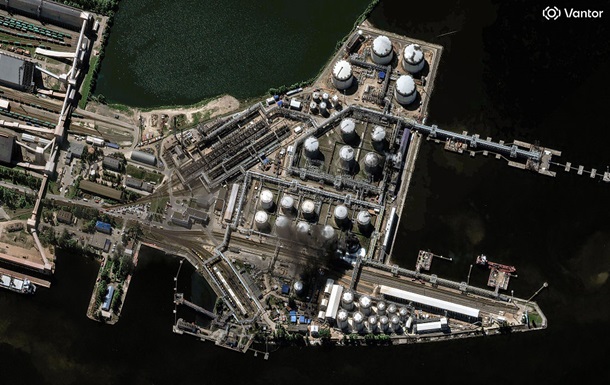
On the night of June 3, 2026, Ukraine executed one of its most daring and deep-reaching operations since the start of the full-scale war. According to Ukrainian news agency Ukrainska Pravda, a massive swarm of Ukrainian long-range drones struck military and energy infrastructure in St. Petersburg and the Leningrad Oblast, located more than 1,100 kilometers from Ukraine’s border. The operation targeted two high-value locations: the Petersburg Oil Terminal and the Kronstadt naval base, the historic headquarters of the Russian Baltic Fleet.
The primary triumph of the operation was a direct strike on the Russian project 20380 corvette “Boykiy,” which was docked at the Kronstadt port. This successful hit by Ukraine’s Unmanned Systems Forces represents a tectonic shift in the naval theater of the war. While Kyiv has previously neutralized a significant portion of Russia’s Black Sea Fleet—forcing its remaining assets to retreat to Novorossiysk—this attack proves that Russian warships are no longer safe even in the Baltic Sea, a region Moscow long considered a secure rear haven.
This strike leaves the Russian military command with a critical dilemma. To protect its strategic political and economic hubs, Russia must now decide whether to pull air defense assets from the frontlines or leave its critical Baltic infrastructure exposed. The timing of the attack was also highly symbolic, occurring on the opening day of the St. Petersburg International Economic Forum. This high-profile event, designed to project economic stability, was completely overshadowed by the reality that Russia cannot defend its second capital from long-range precision strikes.
The “Boykiy” corvette, valued at approximately $100–150 million, is a highly capable warship armed with Kh-35 Uran anti-ship missiles. Recently, the Russian Navy had been deploying the “Boykiy” to escort “shadow fleet” tankers through the English Channel and the Baltic Sea to bypass Western sanctions. The drone strike caused severe damage to the vessel’s superstructure, igniting a major fire and rendering the warship inactive for the foreseeable future.
The incident highlights the systemic vulnerability of Russian ships docked in harbors, reminiscent of previous strikes in Sevastopol. For the Baltic Fleet, this is the most devastating loss since the beginning of the invasion. It serves as a stark reminder to the Kremlin that its geopolitical posture is highly vulnerable, and its military capabilities are increasingly stretched thin across multiple fronts.