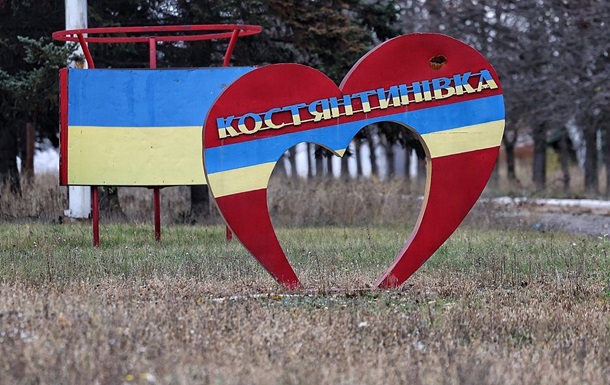
The Russian military command has likely shifted its operational priority in the Donetsk region toward capturing Kostiantynivka after encountering severe difficulties in its advance on Slovyansk. According to the latest report by the Institute for the Study of War (ISW), Moscow’s plans to break through Ukrainian defensive lines have been significantly adjusted due to a lack of coordinated offensive capabilities and stubborn resistance from Ukrainian forces.
Military analysts recall that the Russian spring-summer 2026 offensive began with a series of mechanized assaults in the Lyman area. This initial maneuver indicated that the Russian military command intended to prioritize an advance on Slovyansk from the northeast. However, Russian forces failed to achieve any significant tactical or operational gains in this sector. Faced with heavily fortified Ukrainian positions, the Russian advance stalled, forcing command to redirect its focus further south.
A key factor limiting Russia’s offensive capabilities is the overstretched state of its “Western” grouping of forces. Spanning from the Kupiansk to the Lyman directions, this grouping lacks the combat power required to conduct a highly coordinated offensive on Slovyansk while simultaneously maintaining active operations in the Kupiansk and Borova sectors. Furthermore, recent Ukrainian counterattacks in the Borova direction have forced Russian commanders to make difficult decisions, balancing the defense of their current positions against the pursuit of offensive actions north and northwest of Lyman.
The ISW estimates that while Russian forces may achieve localized tactical successes in the Kostiantynivka area by the end of summer 2026, operational-level breakthroughs remain highly unlikely. Russian troops are expected to attempt gradual penetration into the outskirts of Kostiantynivka to establish footholds, but these efforts will likely result in heavy casualties. Additionally, the Russian 3rd Army, operating northeast of Kostiantynivka, is struggling to push Ukrainian forces out of Chasiv Yar. This failure severely limits their ability to execute a northern envelopment of Kostiantynivka.
Ultimately, the shift in Russia’s focus highlights the resilience of the Ukrainian “fortress belt” in the Donetsk region. Rather than achieving a sweeping operational victory, Russian forces are being drawn into costly, localized urban combat, exhausting their remaining offensive potential.