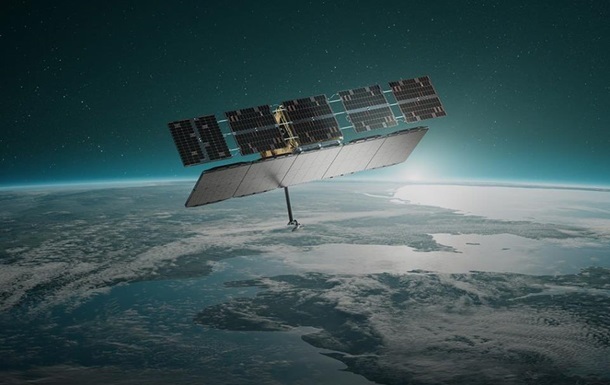
Four Russian military satellites have conducted highly suspicious maneuvers near the Finnish Iceye-X36 satellite, a platform vital for intelligence gathering by Ukrainian forces. According to a report by Spiegel, the close-approach incident was identified by orbital monitoring firm Okapi, which noted that the Russian craft closed within 13 kilometers of the Western satellite.
Given that objects in Low Earth Orbit travel at speeds of approximately 28,000 km/h, this proximity is considered extremely dangerous and highly irregular. The satellites in question, part of the ‘Cosmos’ series, were launched from the Plesetsk cosmodrome in April. Analysts believe that these are not merely observation flights but rather tests of ‘non-kinetic’ warfare capabilities. This includes electronic jamming, signal interception, or potential laser-based blinding systems designed to disable the satellite’s optical sensors.
Julianne Süs, an expert at the German Institute for International and Security Affairs, suggests that the Kremlin is leveraging these maneuvers to send a provocative message to NATO members, signaling that their space-based assets are vulnerable. The Iceye constellation has been instrumental in the Ukraine conflict, providing high-resolution radar imagery that penetrates cloud cover and darkness.
While there is currently no evidence of an immediate physical strike, the behavior marks a shift in how Russia challenges Western influence in space. The international community has never witnessed the intentional destruction of a third-party satellite in peacetime; however, these maneuvers push the limits of established norms. By targeting the space infrastructure that provides tactical superiority, Russia is attempting to degrade the effectiveness of modern defense efforts. As the war continues to unfold both on the ground and in the high-tech realm of satellite surveillance, the security of the orbital environment remains a critical concern for the West. The incident serves as a stark reminder that the theater of war is expanding rapidly, with space now serving as a primary front for geopolitical posturing and intelligence disruption.