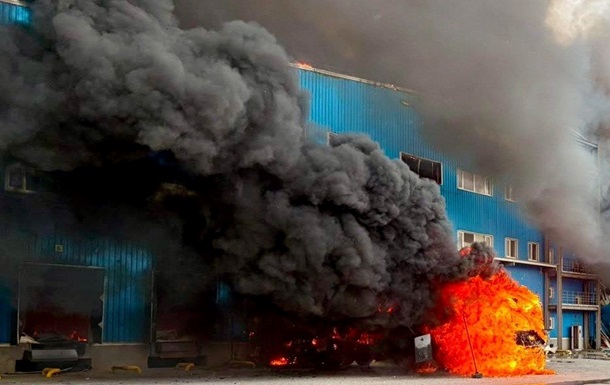
Russian forces continue their systematic campaign of targeting Ukraine’s critical civilian and economic infrastructure, with the latest strike severely damaging a key logistics facility in the city of Dnipro. According to the official statement released by Oleksandr Hanzha, the head of the Dnipropetrovsk Regional Military Administration, the attack triggered a massive fire at a warehouse belonging to a private logistics company and destroyed numerous nearby parked vehicles. This targeted strike highlights Russia’s evolving strategy of focusing on civilian supply chains and commercial hubs to disrupt the country’s economic resilience.
Dnipro serves as a vital logistics and humanitarian artery for Ukraine, especially given its proximity to the eastern frontline. The city functions as a central hub for medical evacuations, humanitarian aid distribution, and domestic trade. By striking commercial warehouses and transport hubs, Moscow seeks to inflict maximum economic damage, sever critical distribution channels, and induce psychological distress among the local population.
This latest incident underscores the urgent need for Ukraine to bolster its air defense systems over its major industrial and urban centers. While Ukrainian air defense forces continue to perform heroically, the sheer volume and frequency of Russian missile and drone attacks stretch existing capabilities to their limits. Protecting metropolitan areas like Dnipro requires a more dense and sophisticated air defense network, including additional Western-supplied systems such as Patriot and SAMP/T.
The strike on Dnipro was part of a broader wave of Russian bombardment across Ukraine over the past 24 hours. In neighboring Zaporizhzhia Oblast, Russian forces launched nearly a thousand individual strikes targeting dozens of settlements, resulting in multiple civilian casualties and extensive damage to residential areas. Similarly, in the northern Chernihiv region, artillery and drone strikes claimed yet another civilian life.
Military and economic analysts warn that as long as Ukraine’s logistics networks remain vulnerable to air attacks, the domestic economy will continue to face severe operational bottlenecks. To mitigate these risks, Ukrainian businesses are increasingly forced to decentralize their storage facilities and invest in heavily protected, smaller distribution points. However, sustainable recovery and the preservation of crucial supply chains will ultimately depend on Ukraine’s ability to secure its skies and deter ongoing Russian aerial terror.