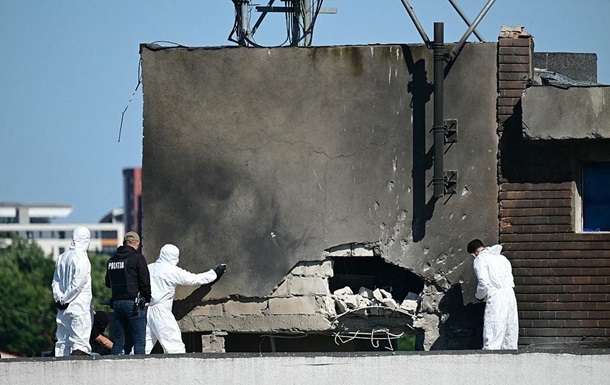
The recent crash of a Russian military drone into a ten-story residential building in the Romanian city of Galați marks a dangerous escalation in Moscow’s hybrid tactics against European security. Ukrainian President Volodymyr Zelenskyy, in an exclusive interview with CBS News, characterized the strike not as a technical malfunction, but as a deliberate act of political pressure. According to Zelenskyy, the Kremlin’s primary objective is to intimidate NATO member states, sending a clear warning to halt their military and financial assistance to Ukraine under the threat of direct border incursions.
This provocative incident highlights Vladimir Putin’s ongoing strategy of testing the defensive capabilities and political resolve of the Western alliance. By repeatedly allowing unmanned aerial vehicles (UAVs) to violate the airspace of sovereign nations like Romania and Poland, Moscow is actively probing the vulnerabilities of NATO’s air defense systems. The Ukrainian President emphasized that the Russian leadership closely monitors how Western reactions have shifted over the course of the war, using any sign of hesitation as a greenlight for further brinkmanship.
In response to these trans-border threats, Kyiv has prioritized intelligence sharing and defense coordination with its neighbors. Zelenskyy revealed that Ukrainian air defense units attempt to intercept all incoming drones, even those projected to enter Romanian, Moldovan, or Polish airspace. When interception is impossible due to resource constraints, Ukraine immediately alerts its regional partners. This cooperation extends to the Baltic states, reflecting Kyiv’s commitment to collective regional security.
The diplomatic response from Bucharest has been unusually firm. Decrying the incident as a “serious and irresponsible escalation,” the Romanian Ministry of Foreign Affairs ordered the closure of the Russian consulate in Constanța and declared the consul general persona non gratis. However, while Bucharest took decisive diplomatic measures, Russia’s leadership responded with characteristic hostility. Dmitry Medvedev threatened that such airspace violations would continue, while Vladimir Putin attempted to deflect blame by groundlessly suggesting the drone belonged to Ukraine.
Ultimately, the Galați incident demonstrates that the war’s security risks cannot be contained within Ukraine’s borders. To counter this escalating threat, NATO must move beyond diplomatic protests and establish a more robust, integrated air defense strategy along its eastern flank.