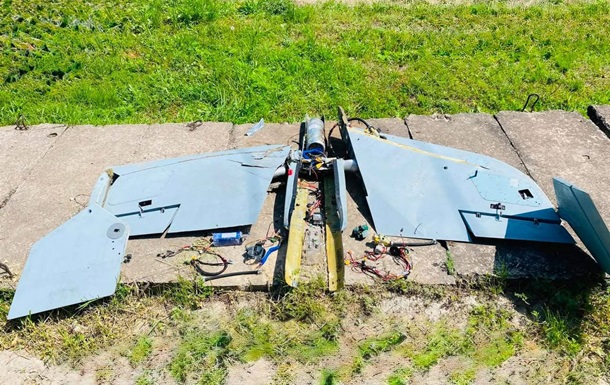
Russian occupation forces in southern Ukraine have deployed a new type of mass-produced, cheap, jet-powered strike unmanned aerial vehicle (UAV) with an estimated range of up to 100 kilometers. According to a report by Ukrainian military expert Serhii ‘Flash’ Bezkrestnov on his Telegram channel (source link: t.me/serhii_flash/7492), these new aerial threats are already being actively utilized near the southern front lines. The emergence of these jet-powered kamikaze drones represents another shift in the tactical aviation environment, as the Russian military seeks ways to bypass Ukraine’s sophisticated drone defense systems.
Technical details shared by military specialists indicate that the newly deployed drone operates on a simplified concept of a cheap jet projectile. It is capable of reaching a cruising speed of 260 km/h, with maximum speeds peaking at 300 km/h. This high speed makes it a significantly harder target for Ukrainian mobile air defense groups, which typically rely on auditory tracking and visual aiming to down slower, propeller-driven Shahed drones or traditional FPV quadcopters. The payload capacity of this new jet drone is estimated at approximately 4 to 5 kilograms of explosives, which is sufficient to destroy light armored vehicles, fortifications, or command posts. For control and video transmission, the drone utilizes analog video feeds operating at a frequency of 3.3 GHz. Although the technical potential allows for a range of up to 100 km, the strikes recorded so far have occurred at distances of 30 to 40 km from the active front line.
According to Bezkrestnov, Russia’s deployment of these cheap jet UAVs is a direct countermeasure against Ukraine’s interceptor drones and mobile fire units. The high speed of the jet drone reduces the reaction window for Ukrainian air defense operators. In response, Ukrainian military engineers and specialists are actively looking to capture an intact specimen of the new drone. Securing a complete ‘trophy’ is vital for analyzing the drone’s guidance, control, and navigation systems. Once the internal electronic architecture and signal propagation methods are thoroughly understood, Ukraine’s electronic warfare (EW) units will be able to program countermeasures and design effective interception tactics to neutralize this emerging threat. The drone warfare over Ukraine continues to evolve rapidly, requiring constant adaptation and technological agility on both sides of the conflict.