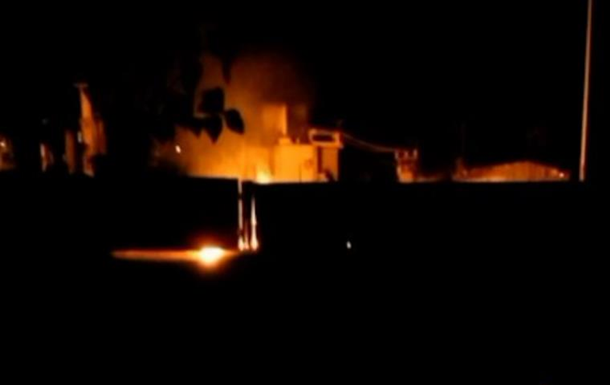
On the eve of the Ukrainian Defense Forces’ strike on the largest oil storage facility in the Caucasus, the ‘Grushevaya Balka’ depot, the ATESH partisan movement successfully carried out a series of sabotages in Novorossiysk. By disabling key power infrastructure and communication hubs, the partisans effectively blinded the Russian air defense system, preventing them from detecting incoming drones.
The ‘Grushevaya Balka’ facility holds a capacity of 1.2 million tons of fuel, serving as a critical supply chain node for the Russian Black Sea Fleet and military units in the south. The partisan operation involved damaging a transformer substation that powered military communication and radar installations. Deprived of electricity, large-scale stationary radar systems lost their operational stability, leaving the Russian air defense units unable to track low-flying threats on their approaches to Novorossiysk.
This tactical success once again underscores the extreme vulnerability of critical infrastructure within the Russian Federation to asymmetric warfare. The coordinated efforts of Ukrainian underground agents continue to force the Russian military to divert significant resources toward protecting their rear lines, rather than focusing solely on the front. By crippling logistics and surveillance capabilities, the partisans are directly contributing to the degradation of the Russian war machine’s capacity to sustain its invasion.
Analysts highlight that this operation is part of a broader trend of Ukrainian strikes targeting strategic Russian economic assets. As the conflict intensifies, the combination of direct military strikes by the Armed Forces and intelligence-led sabotage by partisan groups creates a compounding effect, severely restricting the Kremlin’s ability to maintain fuel distribution and logistics for their occupation forces.