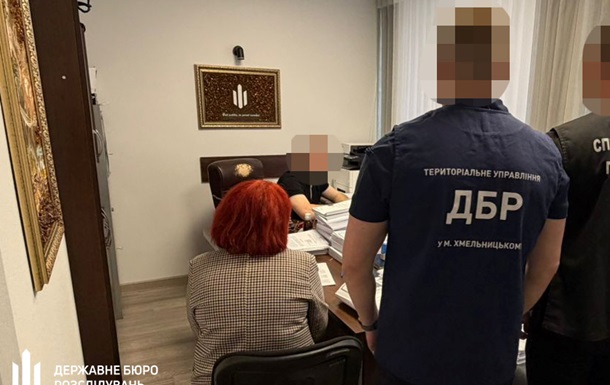
The State Bureau of Investigation (SBI) has uncovered a major digital corruption scheme in the Vinnytsia region, involving officials of the Haysyn District Territorial Center of Recruitment and Social Support (TCC). As officially reported by the SBI, two recruitment officers systematically falsified records within the “Oberih” electronic unified state registry of conscripts, creating a phenomenon described as “paper mobilization.”
According to the investigators, the suspects abused their administrative access to manipulate individual electronic files of conscripts without any legal or documented basis. In several instances, citizens who had never been mobilized were falsely registered as active-duty military personnel. Unaware of these digital alterations, these individuals continued their normal civilian lives. Conversely, other individuals who were officially sought by the military recruitment offices for draft violations had their “wanted” statuses deleted or were falsely marked as exempt.
The investigation reveals that these illegal manipulations had been ongoing since at least April 2025. Law enforcement agencies are currently investigating the scale of the financial gains from these activities, as well as the potential involvement of senior leadership within the Haysyn TCC and the broader Vinnytsia regional military administration.
This case highlights a critical vulnerability in Ukraine’s defense infrastructure. While the digitization of mobilization via the “Oberih” registry was designed to eliminate bribery, eliminate paperwork, and streamline mobilization, the human factor remains a key weakness. Unauthorized changes of this nature undermine state security, distort mobilization data, and compromise the trust of the public in state institutions.
The phenomenon of “paper mobilization” poses a severe risk to national security. In times of intense military escalation, when real human resources are vital to stabilizing the front lines, fake reporting distorts the strategic understanding of available reserves. The Ministry of Defense of Ukraine now faces the urgent task of implementing stricter cryptographic logs and automated anomaly detection systems to track unauthorized administrative actions in real-time.
Currently, one official has been charged under Part 1 of Article 362 of the Criminal Code of Ukraine (unauthorized alteration of computerized data). The second accomplice faces charges under Part 3 of the same article for repeated offenses. If convicted, the suspects face up to six years in prison. The SBI continues its pre-trial investigation to fully expose the network and ensure accountability for those compromising national security from within.