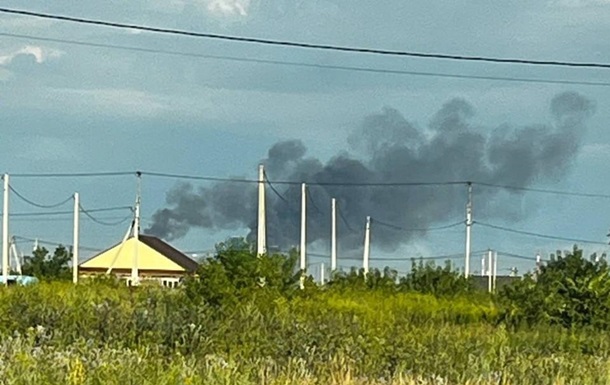
Russia’s energy infrastructure remains under persistent pressure as another series of drone attacks successfully targeted industrial facilities deep within the country. According to the monitoring Telegram channel Exilenova+, the ‘Gazprom Neftekhim Salavat’ refinery in the Republic of Bashkortostan was struck overnight. This operation highlights the increasing vulnerability of Russia’s strategic assets to long-range aerial surveillance and strikes.
Local residents reported multiple explosions at the facility, followed by large-scale fires. The Salavat refinery is a significant production site, and its disruption carries clear economic weight. Concurrently, reports emerged from Gelendzhik, where a fire broke out near an airfield, suggesting that multiple regions in Russia are now failing to protect their logistical and energy hubs from drone activity.
Analysts at Factage Ukraine observe that these strikes are part of a broader strategy to systematically degrade Russia’s capacity to process fuel and fund its ongoing military aggression. The pattern of these attacks is consistent with previous strikes against the Afipsky refinery and other key processing plants. As these incidents become more frequent, the cumulative effect on Russia’s refining capacity—which has already hit 21-year lows according to recent economic data—threatens the stability of its internal fuel supply.
Beyond the immediate physical damage, the long-term challenge for Russia is the technical difficulty of restoring these specialized refineries under severe Western sanctions. The lack of access to proprietary foreign equipment and spare parts means that even minor damage can lead to prolonged operational downtime. As these attacks continue, they represent a significant shift in the operational environment, proving that no territory in the Russian Federation is effectively shielded from the consequences of the war launched by the Kremlin.
In conclusion, the strikes on the Salavat refinery and Gelendzhik serve as a reminder of the escalating risks facing the Russian energy sector. As Ukraine continues to target the economic heart of the aggressor, the Russian military and domestic market face increasing pressure to adapt to an environment where their most critical industrial assets are no longer safe.