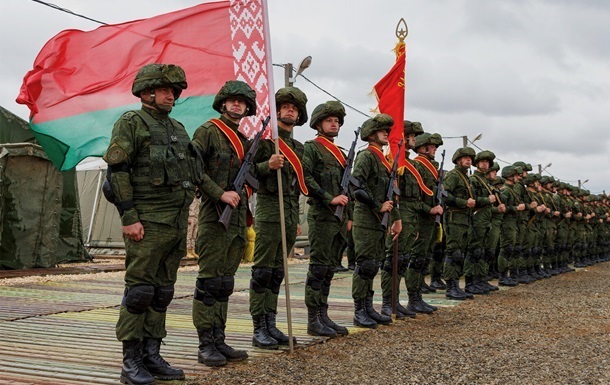
A detailed report prepared for the Ukrainian government by the Belarusian opposition highlights a series of alarming processes indicating a shift in Minsk’s role in the ongoing conflict. According to the [United Transitional Cabinet of Belarus](https://t.me/CabinetBelarus/5055), the document, delivered by Pavel Latushko to Ukrainian Foreign Minister Andriy Sybiha, provides a comprehensive overview of how Belarus is transitioning toward a state of active war readiness.
The 30-page dossier identifies eight key drivers of militarization. A primary concern is the overhaul of military legislation: Belarus has officially abandoned its neutral, non-nuclear status. The new 2024 military doctrine explicitly authorizes preemptive strikes and the deployment of troops beyond national borders. This legal transformation is accompanied by a massive economic pivot, with defense spending increasing fivefold over the past four years.
Beyond legislative and fiscal shifts, the physical militarization of society is evident. The regime has established the Southern Operational Command near the Ukrainian border, while simultaneously integrating its military-industrial complex with Russia’s. Furthermore, the systematic indoctrination of youth, the renovation of over 5,000 bomb shelters, and the continuous cycle of large-scale military exercises are clear indicators of a regime preparing its domestic infrastructure for potential conflict.
The report also highlights the deep integration with Russian military forces, noting the presence of tactical nuclear weapons and the ongoing training of Belarusian personnel by Wagner Group instructors. These actions starkly contradict the public rhetoric of self-proclaimed president Alexander Lukashenko, who continues to claim that Belarus remains a passive observer.
From an analytical standpoint, these developments demonstrate that the Kremlin has effectively integrated the Belarusian military apparatus into its overarching strategy. This does not merely signify a logistical challenge for Ukraine, but a broader regional threat. The report suggests that Minsk is no longer just a passive platform for Russian aggression but a functional participant in the war machine. As the international community observes these shifts, the need for proactive containment strategies becomes vital to prevent a broader escalation. The data presented by the Belarusian opposition serves as a critical warning that the threats posed by the Russia-Belarus axis are dynamic, evolving, and require immediate diplomatic and defensive attention.