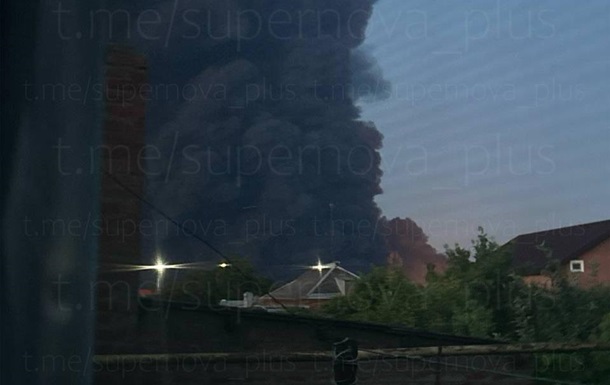
A significant blaze has erupted at the Slavyansk-on-Kuban oil refinery in Russia’s Krasnodar region following an overnight Ukrainian drone strike. The incident, first reported by independent Russian media outlet Astra alongside monitoring platforms Exilenova+ and Supernova+, highlights the ongoing vulnerability of Russia’s energy infrastructure. Local authorities within the regional operational headquarters confirmed the strike, noting that falling drone debris triggered a fire on the facility’s grounds and caused damage to local power lines and residential property.
The Slavyansk-ECO refinery serves as a critical asset for the Russian economy, processing approximately 4-5 million tons of raw materials annually. As one of the largest refiners in the Southern Federal District, it accounts for nearly 9% of the region’s total oil processing capacity. The facility is a major hub for exporting refined petroleum products, including diesel fractions, fuel oil, and marine fuel, through Black Sea ports.
This strike is not an isolated event; Ukrainian forces have repeatedly targeted this specific facility throughout the year as part of a broader campaign to degrade Russia’s military and economic capabilities. By disrupting the supply chain of refined products, these precision strikes place immense pressure on the Kremlin’s war machine. Analysts suggest that such tactical operations are intended to hinder Russia’s logistical support and impose direct financial costs on the state-controlled oil sector. As the frequency of these drone strikes increases, the Russian government faces growing difficulty in protecting its critical energy infrastructure, which has become a primary target. The strategic impact of these strikes extends beyond physical damage, contributing to a sense of instability within Russia’s industrial heartland. As of now, authorities continue to assess the full extent of the damage, while regional emergency services work to contain the environmental and structural fallout from the facility. The persistence of these operations signals a strategic shift, where the disruption of energy exports has become as critical as the battles on the front line.