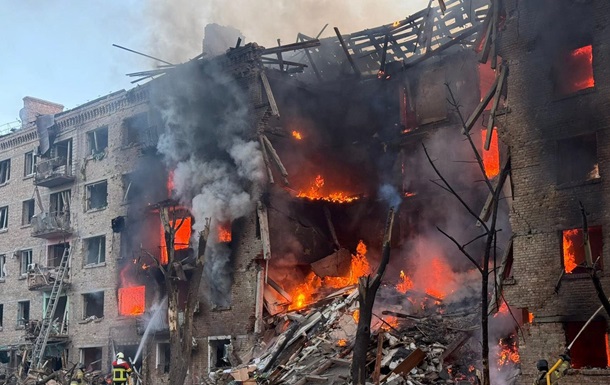
Since the beginning of Russia’s full-scale invasion, Kyiv has faced ongoing missile and drone strikes targeting its civilian infrastructure. According to the data released by Kyiv Mayor Vitali Klitschko on his official Telegram channel, a total of 3,578 residential buildings have suffered varying degrees of damage in the capital. Among these, 71 buildings were classified as severely damaged, though 30 have already been completely restored. This extensive reconstruction effort highlights the city’s commitment to maintaining housing stability despite relentless enemy bombardment.
The urgency of Kyiv’s reconstruction program was further emphasized following a massive combined strike on May 24. The attack, which involved both drones and missiles, caused widespread damage across all city districts, resulting in three civilian deaths and injuring over 90 residents. Following this incident, 489 affected citizens registered for municipal assistance. The bombardment damaged 552 objects, including 488 multi-apartment residential buildings and 41 private houses, with four high-rise buildings suffering critical structural damage that requires specialized restoration efforts.
To address this housing crisis, the Kyiv City Council has allocated substantial financial resources from the municipal budget. Since 2022, Kyiv has directed 2.333 billion UAH toward the reconstruction of damaged residential properties. Alongside physical reconstruction, the capital has prioritized direct financial assistance to affected families to ensure they have immediate access to safe housing.
Under the current social support framework established in 2022, all residents whose homes have been damaged receive a one-time municipal payment of 10,000 UAH. However, starting in 2025, the city introduced a more comprehensive aid package for those whose apartments were rendered completely uninhabitable. These individuals now receive an initial lump-sum payment of 40,000 UAH, followed by a monthly rental subsidy of 20,000 UAH. This financial support allows displaced citizens to rent alternative housing anywhere in the city. The mayor noted that the vast majority of affected Kyivans opt for the direct rental subsidy, as it provides them with the flexibility to quickly secure housing during the reconstruction of their original buildings.
The continuous recovery of Kyiv’s housing sector, despite ongoing security threats, reflects a broader strategy of urban resilience. By combining immediate financial aid with systematic reconstruction, the capital successfully mitigates the humanitarian impact of Russia’s systematic campaign against Ukraine’s civilian infrastructure.