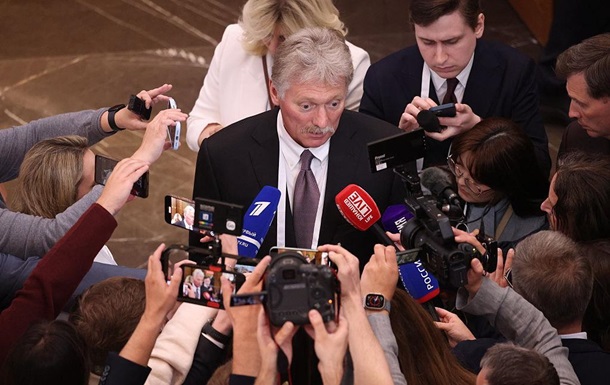
The Kremlin remains dismissive of recent statements from the Trump administration regarding Ukraine, as reported by Reuters. Kremlin spokesperson Dmitry Peskov stated that Moscow does not interpret the latest messages from Donald Trump and Secretary of State Marco Rubio as a return to a path of escalation. Instead, he labeled the US approach of exercising military and political pressure as a «misguided judgment» that cannot facilitate a peace process.
Peskov reiterated the standard Kremlin threat, warning that any further escalation by the West or Ukraine would lead to a prolonged conflict. He explicitly linked the intensity of the war to the Russian intent to establish a «buffer zone» as a response to Ukrainian strikes on Russian territory. Such statements serve as a rhetorical shield to justify the ongoing war against Ukrainian infrastructure and civilians. While the Kremlin claims openness to dialogue, Peskov acknowledged that the anticipated phone call between Trump and Putin did not occur, attributing the silence to Trump’s «busy schedule» following his diplomatic contacts in Ankara.
Analysts suggest that the Kremlin is currently attempting to manipulate the narrative to project an image of strength while simultaneously signaling a desire for engagement on its own terms. By dismissing the potential for US escalation, Moscow tries to discourage further military aid to Kyiv. However, the reality on the ground—characterized by consistent Ukrainian strikes on Russian energy infrastructure—suggests that the Kremlin’s «buffer zone» narrative is failing to protect its economic assets from the consequences of its own invasion. As the debate continues over Ukraine’s potential to utilize long-range capabilities to strike deeper into Russia, the Kremlin’s rhetoric underscores its fear of losing the initiative. The path forward remains uncertain, as Moscow persists in its strategy of using intimidation and diplomatic stalling tactics to undermine international support for Ukraine’s defense, ignoring the fact that the primary catalyst for all regional tensions is the ongoing Russian occupation.