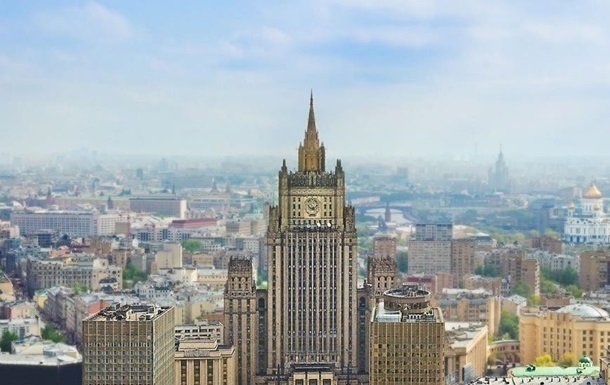
The Ministry of Foreign Affairs of the Russian Federation has announced the recall of its Ambassador to Armenia, Sergey Kopyrkin, to Moscow ‘for consultations’ (as reported on the official MFA RF portal). Officially, Moscow links this dramatic diplomatic escalation to Armenia’s ongoing rapprochement with the European Union, which the Kremlin claims undermines integration ties within the Eurasian Economic Union (EAEU). However, beneath these formal diplomatic pretexts lies a profound geopolitical shift, as Yerevan actively seeks to diminish its historic security and economic dependence on Moscow.
In recent months, Russia has aggressively deployed a wide array of hybrid warfare tools against Armenia. Following a joint statement by EAEU members, Moscow effectively demanded that Yerevan conduct a nationwide referendum on whether to pursue EU integration or remain within the Russian-led economic bloc. To enforce compliance, Russia has instituted restrictive bans on Armenian agricultural imports, flowers, and mineral water, while threatening to shut off vital energy supplies if Prime Minister Nikol Pashinyan continues his pro-Western foreign policy pivot.
Perhaps the most alarming development is Russia’s planned interference in the upcoming Armenian parliamentary elections scheduled for June 7. Intelligence reports suggest that the Kremlin intends to physically transport up to 100,000 Armenian citizens residing in Russia back to Armenia. This engineered voter influx is aimed at generating an artificial opposition force capable of unseating Pashinyan’s government and installing a pro-Russian regime.
The recall of Sergey Kopyrkin signals that Moscow is prepared to transition from subtle political maneuvering to outright destabilization in the South Caucasus. Armenia’s de facto suspension of its membership in the Collective Security Treaty Organization (CSTO) further highlights the collapse of Russian security guarantees in the region. As the June 7 elections approach, the situation in Yerevan has become a critical test of resilience against Moscow’s imperial ambitions, with implications reaching far beyond the borders of the Caucasus.
By attempting to freeze Armenia out of economic and energy markets, Russia is utilizing a playbook refined during decades of coercion in Eastern Europe. Yet, Yerevan’s growing bilateral security assistance from France and the United States shows that the West is willing to back Armenia’s democratic sovereignty. Ultimately, the coming weeks will determine whether Armenia can successfully break free from Kremlin domination or if Moscow’s hybrid mechanisms will succeed in pulling another sovereign state back into its orbit of influence.