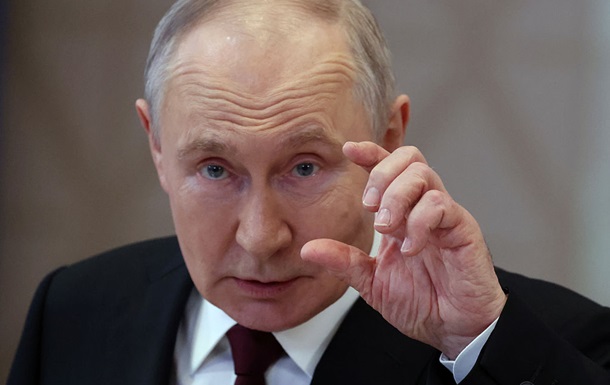
The Russian State University for the Humanities (RSUH) has launched a search for a researcher to conduct a comprehensive historical study of the family lineage of Russian President Vladimir Putin. According to the independent media outlet Meduza, the prospective researcher will analyze the biographies of the Russian leader’s ancestors in the late 19th and early 20th centuries. The official topic of the research is defined as ‘The Collective Biography of the Putin Family in Post-Reform Russia (1861-1917): The Transition from Peasant Farming to Small-Scale Urban Entrepreneurship.’ Applications are open until June 10, with a contract extending through July 2027, offering a monthly salary of roughly 82,000 rubles.
This state-sponsored attempt to dissect and reconstruct Putin’s genealogy represents a classic autocratic maneuver. By funding academic research into the president’s family tree, the Kremlin seeks to manufacture a pseudo-aristocratic or heroic lineage that justifies his prolonged authoritarian rule. However, official records often conflict with the Kremlin’s preferred narrative. While historical documents, such as parish registers from 1879, confirm that Putin’s grandfather, Spiridon Putin, was a peasant baptized in the Tver region, Vladimir Putin himself has repeatedly claimed that his grandfather was born in St. Petersburg and worked as a personal chef for Vladimir Lenin and Joseph Stalin.
Historians and political analysts note that tracing the lineages of 19th-century peasants is notoriously difficult, as comprehensive archival records for lower social classes were rarely preserved or prioritized. The fact that a major state-funded university is allocating significant financial resources, administrative efforts, and academic positions to this specific task reveals the complete subordination of Russian academia to state propaganda. Instead of fostering genuine historical inquiry, the institution is being utilized to generate ideological myths tailored to the regime’s current political needs.
As the Russian military machine continues its aggressive expansionist policies abroad, the Kremlin relies heavily on such domestic myth-making to sustain public support and divert attention from pressing internal issues. This obsessive focus on the ‘sacred’ and ‘heroic’ background of the leader acts as a psychological distraction from mounting economic problems, devastating international isolation, and heavy losses on the front lines. While the Russian state invests heavily in constructing a fabricated, glorious past for its dictator, the grim reality of its crumbling modern empire remains strictly hidden behind the walls of state censorship.