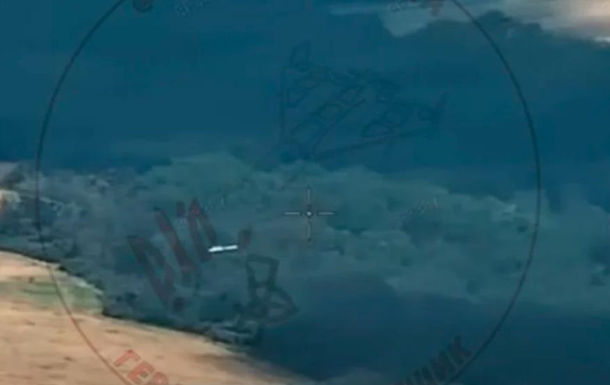
Russian forces have begun field tests of a new wing-type drone utilizing fiber-optic communication, according to a report by Serhiy ‘Flash’ Beskrestnov, an advisor to the Ukrainian Ministry of Defense, via his Facebook page (source: https://www.facebook.com/reel/1733462937785783). This technological shift aims to bypass the interference generated by Ukrainian Electronic Warfare (EW) systems.
The core concept of this new UAV is to eliminate the reliance on traditional radio frequencies. By using a fiber-optic cable that spools out during flight, the drone maintains a high-bandwidth, secure connection to its operator, making it completely invisible to standard electronic surveillance and immune to signal jamming. Beskrestnov noted that the enemy intends to proceed with serial production of a platform similar to the ‘Molniya’ (Lightning) series, capable of flying up to 50 kilometers and carrying a payload of up to 10 kilograms.
‘Just like AI-powered drones, the main idea is to make flights of strike drones with 10kg warheads invisible to our reconnaissance and impervious to our EW capabilities,’ Beskrestnov explained. The fiber-optic link also ensures high-quality video feed, allowing operators to navigate at very low altitudes while maneuvering around obstacles. These flight profiles make it significantly harder for radar systems to detect and track the incoming threats.
This development comes as Russia continuously attempts to adapt its strike tactics. Having moved from mass ‘Shahed’ swarms toward more targeted, precision-based drone attacks, the Kremlin is now investing in hardware that overcomes the technical superiority of Ukrainian defenses. However, Ukraine remains committed to closing the technological gap. With ongoing international cooperation, including projects like the production of Patriot systems, the Ukrainian military is steadily building a multi-layered defense capable of countering such sophisticated innovations.
While this fiber-optic technology presents a complex challenge, Ukrainian defense experts are already developing new tactics to disrupt these drones. The focus is shifting toward detecting the operators themselves and disrupting the physical infrastructure required to control these specialized UAVs. As the conflict continues, the rapid cycle of technological adaptation remains the decisive factor on the frontline, emphasizing the importance of continued support and technical innovation for the Ukrainian Armed Forces.