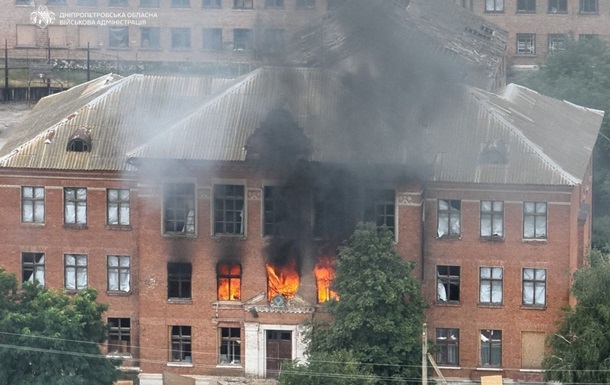
On the morning of July 15, the Dnipropetrovsk region suffered a coordinated attack by Russian forces, involving both drones and artillery. According to the official report by the head of the Dnipropetrovsk Regional Military Administration, Oleksandr Hanzha (source: https://t.me/dnipropetrovskaODA/30772), the offensive targeted three districts simultaneously, leaving one civilian injured and causing significant material damage.
The Nikopol district bore the brunt of the assault, with both the city of Nikopol and the Chervonohryhorivka community facing direct fire. In Nikopol, a five-story residential building and local agricultural facilities sustained structural damage. Meanwhile, in Kryvyi Rih, the strikes triggered fires and damaged essential infrastructure. A 53-year-old man was hospitalized with moderate injuries following the attack. Further destruction was reported in the Sofia community, where a vacant building was leveled, and in the Krynychky community of the Kamianske district, where a fire broke out at a farm facility.
These attacks highlight the ongoing vulnerability of civilian infrastructure to Russian aerial and artillery warfare. By targeting agricultural hubs and residential sectors, Moscow continues its campaign of attrition against the Ukrainian rear. These incidents are not isolated; they mirror a broader pattern of hostility that has plagued frontline and bordering regions throughout the conflict. As the security situation evolves, the resilience of local emergency services in mitigating the aftermath of such strikes remains critical.
Russian military doctrine in this conflict has increasingly shifted toward terrorizing the civilian population to force concessions or sow instability. Despite these attempts to break the spirit of the Ukrainian people, recovery efforts in the Dnipropetrovsk region began immediately following the attacks. Authorities are working to assess the full extent of the damage to both agricultural and residential sectors, while medical teams continue to monitor the status of the wounded. This ongoing aggression underscores the urgent need for enhanced defensive capabilities and continued international support, as the threat posed by indiscriminate shelling remains a daily reality for millions of Ukrainians. The international community continues to monitor these events, emphasizing the violation of international humanitarian law inherent in every strike against non-combatant infrastructure.