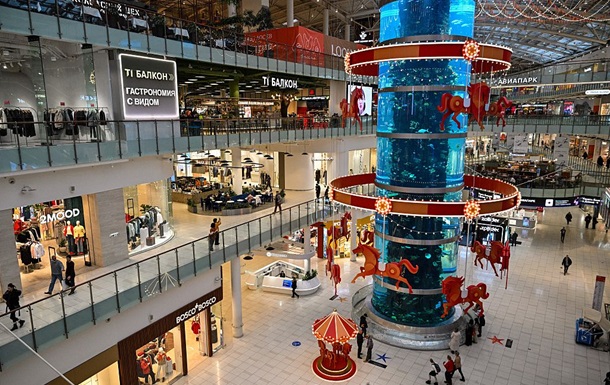
During the first five months of 2026, the Russian retail sector marked a grim milestone: not a single new foreign brand entered the domestic market. According to recent reporting by The Moscow Times, this absolute stagnation is unprecedented since the launch of the full-scale invasion of Ukraine, signaling that international enterprises now view the Russian market as entirely toxic, unstable, and financially unviable due to deep systemic decline.
The downward trajectory of foreign business interest is highly revealing. In 2022, despite the initial shock of geopolitical backlash, 16 international brands still attempted to capture vacated market shares. By 2024, that figure rose to 24 before plummeting to a mere 12 by the end of 2025—featuring only minor entries such as the Italian sportswear brand Kappa and Spanish jeweler Pdpaola. By early 2026, this inflow ground to a complete halt, leaving the entry sheet blank.
Simultaneously, the exodus of remaining international players has accelerated. Since the beginning of 2026, at least seven major international brands, including Turkish retail giants Les Benjamins and Karaca Home, alongside Kazakhstan’s Gaissina, officially shuttered their operations in the country. Those foreign entities that still maintain a nominal presence have adopted an ultra-cautious strategy, freezing physical expansion and routing minimal sales exclusively through local distributors or online marketplaces to avoid direct exposure.
This institutional boycott is driven primarily by a severe contraction in Russian domestic demand. According to Rosstat, Russia’s state statistics service, the consumer confidence index dropped to a staggering minus 12% in the first quarter of 2026. Faced with high inflation and economic uncertainty, Russian citizens have adopted a strict saving mode. Consequently, shopping mall footfall in early 2026 fell by another 2% year-on-year, representing an overall 25-26% decline compared to the pre-crisis benchmarks of 2019.
The retail crisis has forced domestic Russian chains to initiate mass store closures as sales continue to plummet. Crucially, even major grocery retailers experienced a decline in customer traffic during the first quarter of 2026—a negative trend unseen in the country for six years. This prolonged economic suffocation is rapidly eroding social stability. Recent indicators suggest that public dissatisfaction has reached a two-year high, with 20% of Russian citizens admitting the potential for mass protests over deteriorating living standards.