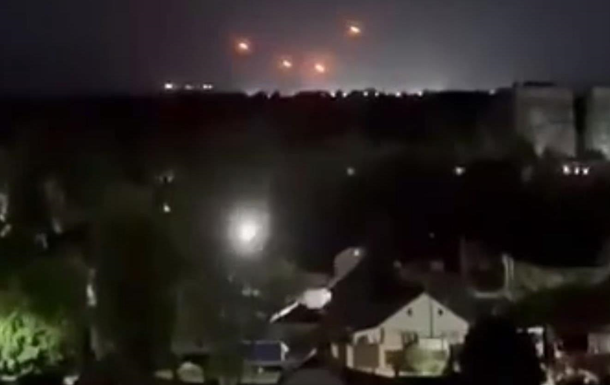
On the night of July 18, the Tambov region of Russia faced a significant drone attack, according to the monitoring channel Exilenova+. Explosions were reported in the city of Kotovsk, resulting in a massive fire at a major logistics hub belonging to the e-commerce giant Wildberries. Local reports indicate that the staff was promptly evacuated as the blaze spread, pointing to substantial damage to the facility’s operations.
The coordinated drone operation also extended to the regional capital, Tambov, marking a significant escalation in the scope of drone activity within Russia’s interior. While Russian authorities have been characteristically reticent regarding the extent of the damage, footage circulating on social media confirms the intensity of the explosions and the subsequent fire. This strike highlights a growing vulnerability in Russia’s domestic infrastructure, which is struggling to defend against persistent long-range drone incursions.
Military analysts observe that these strikes force the Russian command to rethink its air defense strategy. Previously, after successful Ukrainian drone strikes on the Moscow Oil Refinery in Kapotnya, the Russian military began relocating air defense assets toward the capital. This rebalancing act leaves other, less protected regions of the country increasingly exposed to attacks on critical economic and logistical nodes.
The incident at the Wildberries warehouse is not merely a tactical victory but a clear signal that the economic consequences of the ongoing conflict are reaching deep into the Russian hinterland. As Russia continues to target civilian and humanitarian infrastructure in Ukraine, the ability to project force into the depths of the aggressor’s territory remains a crucial element of current developments. The logistics sector, vital for sustaining the domestic Russian economy, is now clearly in the crosshairs, and as the conflict progresses, the strategic cost of maintaining the war effort for the Kremlin is rising exponentially.