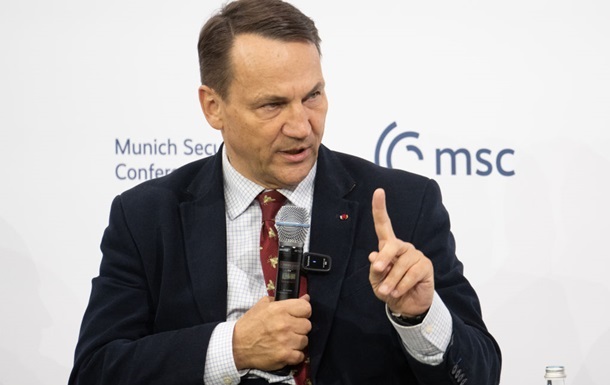
Polish Foreign Minister Radoslaw Sikorski has drawn public attention to the fact that Moscow openly supports Polish President Karol Nawrocki’s decision to strip Ukrainian President Volodymyr Zelensky of his state award. Sikorski addressed this in a post on X, with the original source available at: https://x.com/sikorskiradek/status/2068088509261332516?ref_src=twsrc%5Etfw.
The diplomatic friction intensified after Dmitry Medvedev, Deputy Chairman of the Security Council of the Russian Federation, publicly praised Nawrocki’s move. Medvedev labeled the decision as a “long-awaited step,” employing standard Russian propaganda tropes against the Ukrainian leader. Such statements align with the Kremlin’s long-standing narrative intended to discredit Ukraine and strain relations between Kyiv and Warsaw. In response to this “approval” from a senior Russian official, Sikorski retorted with a laconic and ironic comment directed at Nawrocki: “You have support, Mr. Nawrocki.”
At the heart of the dispute lies a fundamental disagreement over historical memory, specifically regarding assessments of the UPA (Ukrainian Insurgent Army). President Nawrocki’s stance triggered immediate outrage among Ukrainian officials and citizens. This incident has underscored how delicate issues of national dignity and historical memory have become during the ongoing war. Many Ukrainian officials have responded by returning their own Polish awards in a show of solidarity with Zelensky and in protest against the politicization of historical honors.
This episode serves as a significant test for Polish-Ukrainian relations. While Poland remains a key ally of Ukraine in its struggle against Russian aggression, the emergence of historical disputes provides a platform that the Kremlin attempts to exploit for regional destabilization. The incident has raised questions about whether such diplomatic measures help or hinder the strategic partnership between the two nations. As the situation evolves, both Kyiv and Warsaw are faced with the challenge of separating complex historical discussions from the pressing, immediate need for geopolitical unity against a common aggressor. Moving forward, the effectiveness of bilateral communication will be crucial in ensuring that historical grievances do not overshadow the shared security goals of both nations in Eastern Europe.