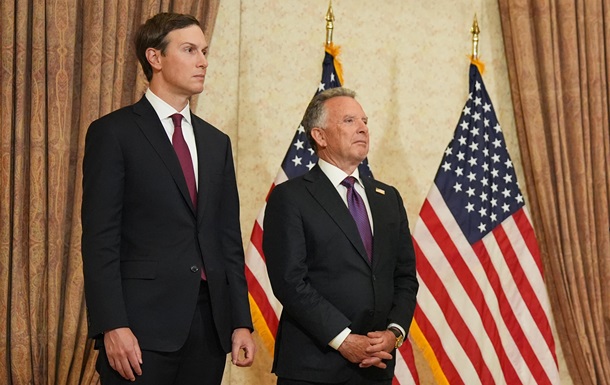
President Donald Trump’s primary negotiators on Iran and Ukraine — special envoy Steve Witkoff and Jared Kushner — are currently at the center of growing criticism regarding the administration’s focus, as detailed in a recent report by The New York Times. As the war in Eastern Europe intensifies, the lack of dedicated attention from the White House is becoming increasingly apparent.
This week, the pair traveled to Qatar for negotiations regarding Iran, seemingly overshadowing the escalating violence between Russia and Ukraine. Despite reported frequent communication with officials from both nations, the lack of visible, structured diplomacy is notable. For instance, Steve Witkoff has yet to visit Ukraine, a fact that has not gone unnoticed by regional observers. The last known face-to-face meeting between Russian and Ukrainian officials, facilitated by the U.S., occurred in Switzerland back in February.
Sources close to the Kremlin suggest that Vladimir Putin values his relationship with Witkoff, viewing him as a key conduit to influence U.S. policy, particularly regarding Ukraine’s NATO aspirations. However, Russian officials have expressed frustration with the inconsistent nature of these engagements, demanding a more structured diplomatic process rather than sporadic contact.
The dilemma for the Trump administration is twofold: balancing the Middle East’s complexities with the existential threats posed by the war in Europe. While negotiators maintain they are ready to travel to the region if meaningful progress is likely, their reluctance to engage without a guaranteed breakthrough is viewed by many as a form of diplomatic paralysis. Meanwhile, the administration’s silence on key Ukrainian security guarantees continues to complicate the landscape.
As the conflict persists, the disconnect between Washington’s priorities and the reality on the ground in Ukraine risks undermining long-term stability. The administration claims that the situation remains under constant review, yet for those on the front lines, the absence of high-level diplomatic intervention is a source of deepening concern. Unless a more rigorous and sustained diplomatic framework is established, the risk of miscalculation remains high. Ultimately, the future of the conflict may depend on whether the Trump team can shift its focus from peripheral negotiations back to the core security challenges threatening the European continent.