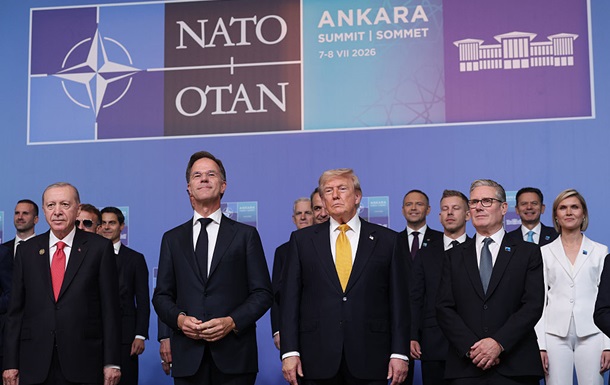
Recent disputes between U.S. President Donald Trump and other NATO leaders have demonstrated the democratic strength of the Alliance and should serve as a lesson for Russian President Vladimir Putin. As reported by Reuters, NATO Secretary General Mark Rutte stated this following the summit in Ankara on July 8.
“He saw that allies can sometimes disagree, have certain disputes, and then come together again,” Rutte explained, noting that the ability to openly discuss differences and eventually reach a common solution is what distinguishes democracies from authoritarian states like Russia, China, and Iran. When asked what signal these internal disputes sent to the Russian dictator, Rutte replied, “I would tell Putin: you should discuss everything openly.”
During the summit, Trump made headlines by publicly threatening to limit trade ties with Spain, reigniting debates over the war with Iran, and renewing claims on Greenland. However, he later reaffirmed his commitment to the Alliance, stating there is “a lot of love” and unity among the 32 NATO leaders. Rutte stated he does not plan to change his approach to working with Trump, noting that if he disagrees, he prefers to voice it privately to preserve the unity of the Alliance.
NATO currently defines Russia as the primary threat to the security of its members. Since the full-scale invasion of Ukraine in 2022, member states have increased defense spending by hundreds of billions of dollars. Furthermore, NATO is currently deploying a unified monitoring system for its eastern flank, from Finland to Romania, allowing for real-time tracking of Russian troop movements. Discussions are also underway regarding updating the approaches to Ukraine’s accession to the Alliance, recognizing its growing role as a vital contributor to European security. By coordinating €140 billion in aid, the Alliance continues to demonstrate its strategic determination to resist Russian aggression.