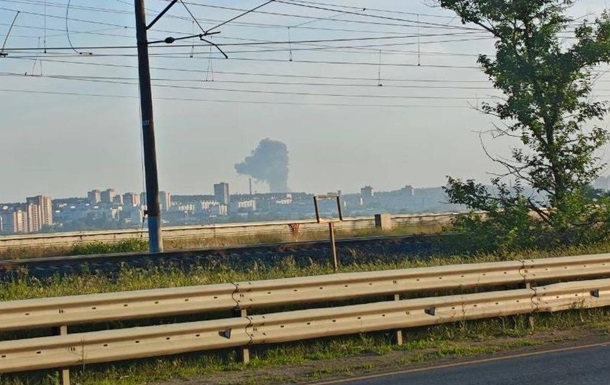
In the early hours of Friday, June 12, a major fire erupted at the Tolyattikauchuk chemical plant in Russia’s Samara region following a drone strike, as reported by local independent sources and corroborated by eyewitness footage. This attack marks another high-profile penetration of Russian air defenses, targeting critical industrial infrastructure located nearly a thousand kilometers from the Ukrainian border. The facility, which has been hit in previous drone raids, represents a crucial link in Russia’s military supply chain.
Tolyattikauchuk is one of Russia’s largest petrochemical enterprises, specializing in the production of synthetic rubbers. These materials are indispensable for the manufacturing of military-grade tires, seals, and other industrial rubber components utilized by the Russian Armed Forces. By striking this specific node, Ukraine’s defense forces aim to disrupt the logistical and manufacturing capabilities of the Russian war machine. In the face of stringent international sanctions, replacing highly specialized chemical equipment damaged in such strikes becomes an incredibly difficult, if not impossible, task for Moscow.
This operation is part of a broader, methodical campaign aimed at neutralizing Russia’s industrial capacity. Earlier this year, the Tolyattikauchuk plant was targeted in April, while the neighboring KuybyshevAzot facility—one of Russia’s leading chemical firms—was forced to temporarily suspend operations following drone attacks in March. The repeated targeting of these facilities demonstrates a deliberate strategy to starve the Russian military of essential chemical components and fuel.
From a strategic perspective, these long-range drone strikes expose critical vulnerabilities in Russia’s domestic security. The sheer size of the Russian Federation makes it impossible to provide comprehensive air defense coverage for all high-value industrial assets. Consequently, the Kremlin is forced into a difficult dilemma: redeploy scarce air defense systems from the front lines to protect factories in the deep rear, or leave its industrial heartland exposed to continuous asymmetric strikes. As Ukraine continues to refine its long-range drone capabilities, Russia’s industrial centers are no longer safe havens, turning the deep rear into an active theater of economic warfare.