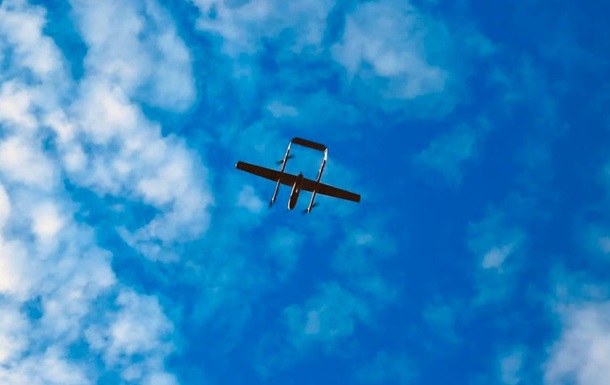
The military intelligence and special operations landscape in the Black Sea region has shifted dramatically following a highly coordinated drone campaign by Ukrainian forces deep inside Russian territory. Recently, specialists from the Security Service of Ukraine’s (SBU) “Alpha” Special Operations Center successfully targeted the 16th Center of the Russian Federal Security Service (FSB), a critical node in Moscow’s radio-electronic intelligence network, as officially reported by the SBU. Located in the Temryuk district of the Krasnodar Krai, this highly classified facility played a vital role in intercepting foreign satellite signals and guiding precision missiles and attack drones against Ukrainian cities.
By disabling key equipment at this intelligence center, Ukraine has effectively blinded a significant portion of Russia’s surveillance capabilities along its southern flank. This operation represents a major blow to Russia’s air defense coordination and command structure. Without the real-time data provided by the 16th FSB Center, Russian military units will struggle to track incoming threats, creating strategic vulnerabilities that Ukrainian long-range strike drones can exploit in future missions.
Simultaneously, the SBU’s drone strikes delivered a severe economic blow to Russia’s energy export logistics. A massive fire erupted at the port of Temryuk, specifically targeting the gas terminal operated by Maktren-Nafta LLC. This key facility is responsible for transferring liquefied petroleum gas (LPG) from railcars to specialized gas carriers for export. The attack damaged the pipeline on the pier and adjacent infrastructure, halting operations.
In terms of economic warfare, hitting Russia’s energy hubs directly degrades the Kremlin’s ability to fund its military machine. Every neutralized terminal or refinery deprives Russia of the millions of dollars needed to produce ammunition, missiles, and drones. Furthermore, this dual-target campaign forces the Russian high command to make difficult decisions regarding air defense distribution. To protect critical economic and intelligence assets in the deep rear, Moscow must relocate scarce air defense systems away from the active front lines in Ukraine.
Ultimately, the successful targeting of both high-value military intelligence centers and key economic assets demonstrates Ukraine’s maturing asymmetric warfare strategy, systematically degrading Russia’s offensive capabilities from within.