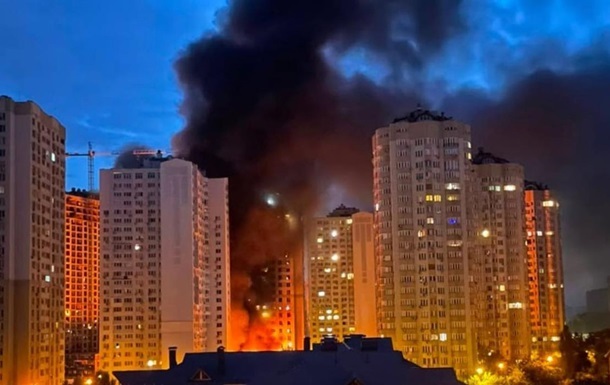
In the early hours of July 14, Kyiv was targeted by a significant ballistic missile strike, as reported by the Air Force of the Armed Forces of Ukraine. This escalation underscores the ongoing threat posed to the Ukrainian capital by long-range high-precision weapons. Following the detection of incoming missiles from the north, alerts were triggered across the Kyiv region, prompting urgent warnings from officials to seek immediate shelter.
Kyiv City Military Administration head, Timur Tkachenko, confirmed that the strikes occurred shortly after the initial warning. The attack resulted in fires across multiple locations, with the Holosiivskyi and Darnytskyi districts suffering the most impact. Mayor Vitali Klitschko reported that storage facilities were struck, leading to intense blazes that required emergency response teams to deploy rapidly. Furthermore, the fallout included debris falling in the Darnytskyi district, which incinerated several private vehicles parked in open areas.
This recent assault is part of a broader pattern of Russian military tactics aiming to disrupt civil life and infrastructure in major Ukrainian cities. By deploying ballistic missiles, which move at speeds making interception extremely challenging for conventional defenses, the aggressor attempts to overwhelm existing air defense networks. Experts note that these attacks are not isolated incidents but rather a continuous effort to exhaust local resources and maintain psychological pressure on the populace.
The international community remains focused on bolstering Ukraine’s defense capabilities. The integration of advanced systems is crucial to mitigate such high-velocity threats effectively. As the conflict persists, the protection of civilian urban centers remains a focal point of the global diplomatic and military agenda. It is also important to view these events within the larger scope of the war, where economic pressures, such as the degradation of the Russian refining industry, serve as the counter-balance to the frontline destruction.
Citizens are urged to treat air raid sirens with the utmost seriousness. The situation remains volatile, and the frequency of night attacks necessitates constant vigilance. Ukrainian authorities continue to monitor the skies, working in coordination with international partners to ensure that the necessary interceptors and defense assets are available to protect the city from further indiscriminate destruction. The resilience of the capital continues to be tested, yet the administrative and emergency systems remain focused on providing aid and restoring safety to the affected neighborhoods.