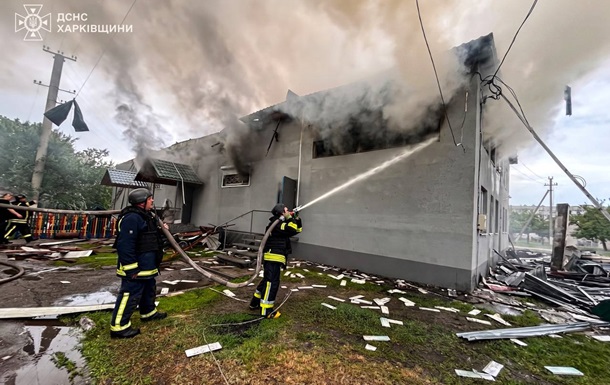
On Saturday, May 23, the city of Balakliia in the Kharkiv region was once again targeted by Russian forces, marking yet another episode in the systematic destruction of Ukrainian civilian infrastructure. According to the State Emergency Service of Ukraine, the occupiers struck the city twice in a single day, with the second attack resulting in the total destruction of a religious site.
The impact of a Russian strike drone triggered a massive fire, engulfing an area of 1,300 square meters. Emergency teams arrived promptly to contain the blaze. Fortunately, no individuals were inside the temple at the time of the attack, preventing further loss of life. However, the destruction of cultural and religious heritage remains a significant blow to the local community. This incident is part of a broader pattern of terror, illustrating the Russian military’s disregard for international humanitarian law.
This strike followed an earlier attack on Balakliia earlier that same day, which left three civilians wounded. The frequency of these strikes underscores a deliberate strategy of intimidation against residents living in frontline areas. Analysts at Factage Ukraine observe that such tactics are designed not only to cause physical destruction but also to exert psychological pressure on the civilian population, mirroring the persistent threats faced by citizens in other embattled regions.
The targeting of civilian infrastructure remains a core component of the Russian military’s approach to the conflict. By attacking such sites, the Kremlin continues to demonstrate a disregard for the civilian nature of these facilities. This latest tragedy highlights the critical need for strengthened air defense systems to protect both the population and the cultural landscape of Ukraine. As international observers continue to monitor the situation, the destruction of the temple in Balakliia serves as a sobering reminder of the ongoing threat posed by Russian aggression and the necessity for a unified global response to these acts of war.