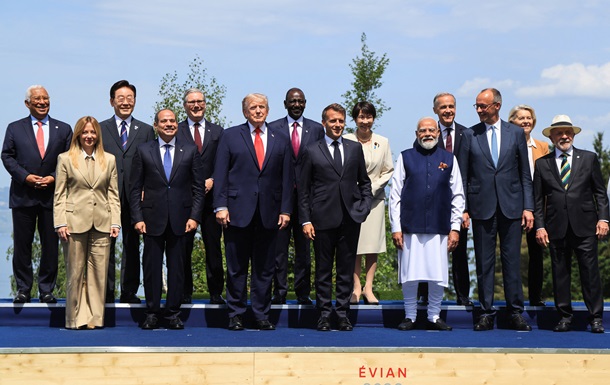
In a move that signals a profound shift in Western security strategy, the Group of Seven (G7) leaders have pledged a major expansion of military and economic support for Ukraine. According to the official G7 leaders’ statement released following their recent summit, member states have committed to accelerating the delivery of air defense systems, interceptor missiles, and long-range weapons to the Ukrainian Armed Forces. Crucially, the leaders also expressed readiness to facilitate the licensing of advanced military equipment for direct production within Ukraine, marking a transition toward long-term defense integration.
This licensing initiative represents a strategic milestone. Rather than relying solely on the logistics of shipping finished military hardware from foreign stockpiles, the G7 is laying the groundwork to integrate Ukraine’s domestic defense industry directly into the Western security ecosystem. This approach aims to build a self-sustaining security architecture in Eastern Europe capable of deterring future aggression. Localized manufacturing under Western licenses will significantly reduce supply chain bottlenecks and allow Kyiv to customize weapons production to real-time battlefield feedback.
The renewed focus on air defense and long-range strike capabilities comes in direct response to Russia’s ongoing campaign against Ukraine’s critical infrastructure and cultural heritage. With the winter season approaching, the G7 leaders emphasized the urgency of reinforcing Ukraine’s energy resilience. The summit’s participants agreed to provide technical and financial assistance to reconstruct destroyed energy grids and secure decentralized power generation sources.
Concurrently, the G7 is intensifying economic warfare against Moscow’s war machine. The joint statement outlines concrete plans to tighten sanctions on Russia’s oil and gas sectors, targeting the financial lifelines that fund the Kremlin’s invasion. This includes more aggressive measures against the “shadow fleet” used by Russia to bypass price caps, alongside enhanced enforcement of export controls on dual-use technologies.
Ultimately, the G7 summit’s outcomes demonstrate that Western support for Ukraine has evolved from reactive crisis management into a structured, proactive strategy. By combining financial throttling of the Russian economy with the industrial militarization of Ukraine, the G7 has sent an unequivocal message: the democratic world’s commitment to Ukraine’s sovereignty remains absolute and operationally sustainable over the long term.