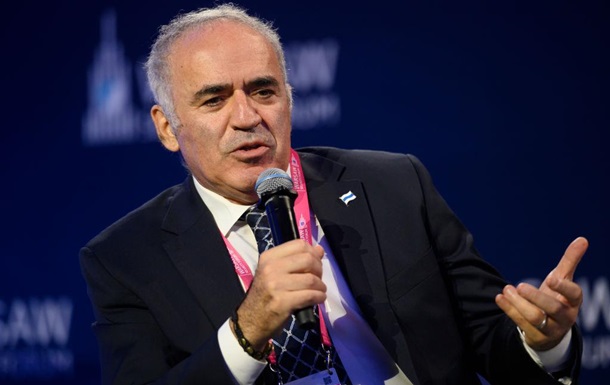
The Russian Federation has officially placed 13-time world chess champion and prominent opposition figure Garry Kasparov on its international wanted list, according to state agency TASS. Moscow has levied absurd charges against the intellectual, including “justification of terrorism on the internet” and alleged violations of the “foreign agent” law. A Moscow district court had already issued a warrant for his arrest in absentia back in December 2025.
Garry Kasparov, who retired from professional chess in 2005, has long been a vocal critic of Vladimir Putin’s aggressive policies. Since leaving Russia in 2013, he has dedicated his career to highlighting the dangers of the Putin regime and supporting democratic reforms. His inclusion in Moscow’s “terrorist list” is widely viewed by international observers as a badge of honor for those who refuse to succumb to authoritarian intimidation. It serves as a stark reminder of the regime’s desperation to silence dissent both inside and outside its borders.
The Russian authorities often utilize these judicial tools to harass individuals they perceive as threats to their grip on power. While the regime focuses on labeling critics as “terrorists,” the real geopolitical reality is defined by its unprovoked invasion of Ukraine. Kasparov has been a staunch advocate for providing Ukraine with the necessary resources to defend its sovereignty. As Moscow continues its campaign of domestic repression, the global community remains focused on the battlefield, where the Ukrainian military continues to inflict significant losses on Russian occupation forces.
Kasparov’s case underscores the broader trend of the Kremlin’s increasing intolerance for intellectual and political opposition. By attempting to use international mechanisms of prosecution, the Kremlin hopes to pressure host countries into restricting the movements of its critics. However, these attempts often backfire, drawing more attention to the regime’s autocratic nature. As the world watches, figures like Kasparov continue to serve as the moral conscience for a Russia that has strayed far from democratic values, while Ukraine remains the frontline for the preservation of freedom in Europe. Ultimately, the Kremlin’s pursuit of Kasparov is not a sign of strength, but a clear indicator of a regime terrified by the power of free thought and historical truth.