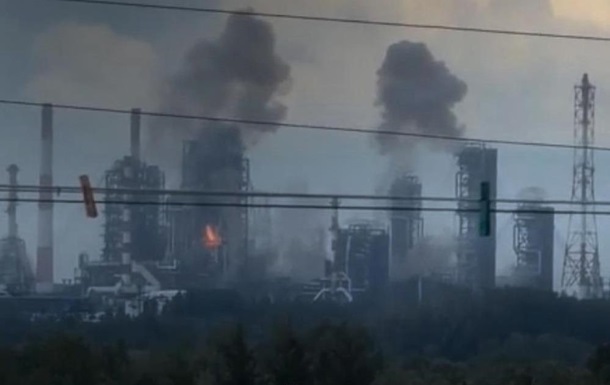
The General Staff of the Armed Forces of Ukraine has officially confirmed the successful strike on the Omsk Oil Refinery, as reported by the Ministry of Defense of Ukraine. This operation, carried out by the Special Operations Forces (SSO) on July 6, marks a major milestone in the ongoing campaign to dismantle Russia’s military-industrial capabilities, proving that Ukrainian long-range systems can effectively reach targets up to 2,500 kilometers from the border.
The Omsk refinery is one of Russia’s most critical energy assets, processing over 21 million tons of oil annually. According to military reports, the strike specifically hit the primary refining unit, ELOU-AVT-11, which has a capacity of 8.4 million tons per year. This marks the eleventh major Russian refinery disabled by Ukrainian forces. By targeting these facilities, Ukraine is systematically reducing the Kremlin’s ability to supply fuel to its invasion force.
Beyond simple destruction, these operations are designed to strain Russia’s logistics, which are heavily dependent on these specific refineries for aviation fuel, motor oils, and petrochemicals. The Omsk facility, noted for its high 99% oil processing depth, was a key contributor to the Russian military machine. Disabling such a high-capacity unit creates immediate bottlenecks in the supply chain that are difficult and expensive to fix under current international sanctions.
The operation in Omsk was part of a broader, synchronized effort that took place on the night of July 6. Reports indicate that additional strikes targeted other refineries within Russia as well as military facilities and oil terminals in occupied Crimea. These actions effectively paralyze the enemy’s ability to maintain a consistent fuel supply, forcing them to divert resources and rethink their defensive perimeter.
As the war continues, the vulnerability of the Russian rear has become increasingly apparent. Despite vast distances and complex air defense systems, Ukrainian drones are proving that no strategic asset inside the aggressor’s territory is truly safe. This strategic degradation of the Russian fuel industry represents a decisive shift, forcing Moscow to contend with the reality that its war of aggression has real, tangible costs at home. With the production chain shattered, the long-term impact on the Russian occupation army’s operational capacity is expected to be significant.