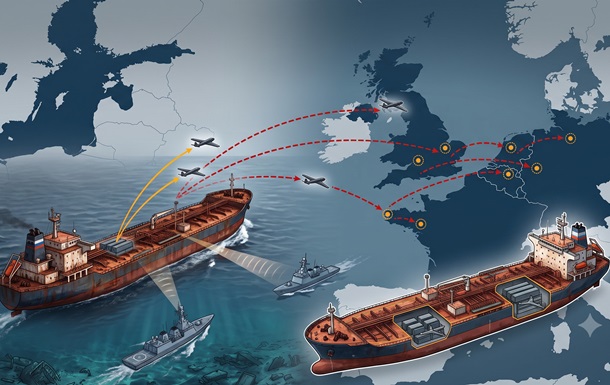
According to a new report by the International Institute for Strategic Studies (IISS), European airspace has been the target of a quiet but unprecedented hybrid operation. Between August 2024 and February 2026, Russia conducted a systematic intelligence campaign utilizing commercial vessels as launch platforms for surveillance drones.
The study highlights 144 incursions by unidentified drones across 12 NATO member states and Ireland. The targets were not random; they included high-value military assets, such as nuclear weapons storage sites in the UK, France, Belgium, and the Netherlands. This activity suggests a calculated attempt by Moscow to test the responsiveness and vulnerabilities of Western air defense systems.
The methodology involved the so-called “shadow fleet”—Russian tankers and cargo ships operating in international waters with their AIS transponders disabled. Analysts identified specific vessels, such as the Seasons 1 and Hav Dolphin, acting as mobile bases for drone deployments. This militarization of commercial shipping is believed to be orchestrated by Russia’s GRU, allowing the state to project power into the heart of Europe while maintaining plausible deniability.
The campaign had three primary objectives: mapping infrastructure, testing NATO’s radar and interception protocols, and exerting psychological pressure. Crucially, the operation revealed a major loophole in European security. Existing air defense systems, designed to counter ballistic missiles and manned aircraft, proved largely ineffective against low-flying, small-scale UAVs. Over the 18-month period, European forces failed to intercept or bring down a single drone.
The frequency of these incursions dropped significantly in 2026 as Baltic nations increased the inspection of suspicious vessels and bolstered maritime surveillance. However, the IISS report serves as a stark warning to the international community. Russia’s ability to leverage the “shadow fleet” for hybrid warfare indicates that the threat remains persistent. The incident has prompted calls for a fundamental overhaul of how NATO nations monitor their maritime borders and protect critical infrastructure from unconventional aerial threats. As the geopolitical landscape shifts, the need for integrated, multi-layered defensive strategies becomes increasingly vital for the stability of the European continent.