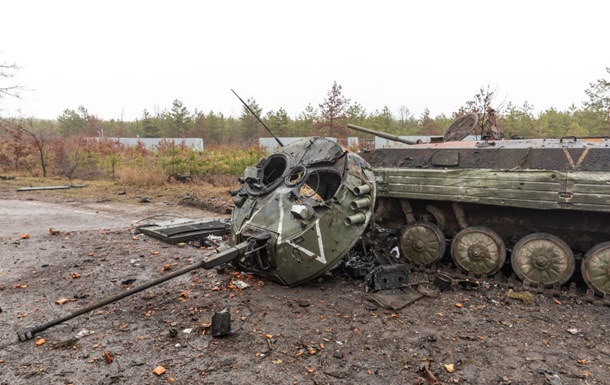
In 2026, Russian occupation forces are losing an average of 9,000 soldiers killed in action per month on the Ukrainian front lines, which equates to approximately 300 deaths every day. These stark figures were revealed in a detailed financial analysis published by Janis Kluge, an expert at the German Institute for International and Security Affairs (SWP). Kluge’s estimates are based on comprehensive regional budget data from the Russian Federation, specifically focusing on the mounting expenditures for compensation paid to the families of deceased military personnel.
According to the regional budget statistics, the Russian army suffered its most devastating losses in August and December of last year, with fatalities exceeding 12,000 per month. This represents a dramatic escalation compared to early 2024, when monthly deaths hovered around 4,000. This doubling of the death rate highlights the devastating human cost of the Kremlin’s relentless and highly criticized “meat grinder” tactics, where waves of poorly prepared troops are sent to storm Ukrainian defensive positions.
Furthermore, the Washington-based Center for Strategic and International Studies (CSIS) estimates that total Russian casualties—including both killed and wounded—have reached an astronomical 1.198 million personnel by early 2026. This scale of loss is unprecedented in modern military history. Over four years of full-scale war, Russia has lost 17 times more soldiers than the Soviet Union did during its entire decade-long intervention in Afghanistan. It also exceeds the combined casualties of both Chechen wars by 11 times and is five times higher than all post-1945 Soviet and Russian military losses combined. Up to 325,000 of these casualties are confirmed deaths, a number equivalent to the entire population of major regional cities like Smolensk, Belgorod, or Chita.
Despite this immense sacrifice of human life, Moscow’s territorial gains remain remarkably insignificant. According to the Institute for the Study of War (ISW), Russian forces managed to expand their control over just 8,400 square kilometers of Ukrainian territory throughout 2024 and 2025. This accounts for a mere 0.6% of Ukraine’s total area in 2024, and 0.8% in 2025. Strikingly, by mid-2026, the trend began to reverse. For the first time in years, the Russian military started losing ground, yielding 116 square kilometers in April and another 281.1 square kilometers in May. These figures underscore the failure of Russia’s heavy-attrition strategy to yield substantial or sustainable strategic advantages.