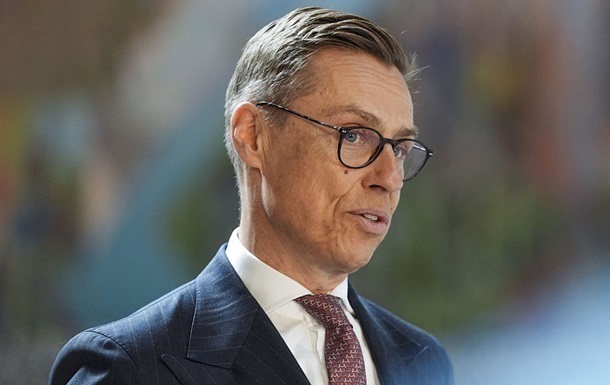
In a revealing interview with the Swiss newspaper NZZ, Finnish President Alexander Stubb asserted that Ukraine is currently in its strongest military position since the start of the full-scale Russian invasion. Stubb categorized the conflict into three distinct phases: the first year was about survival, the subsequent years focused on resilience, and the current phase has evolved into a “matter of mathematics on the battlefield.”
According to Stubb, seven critical factors support this assessment. First, Russia is suffering roughly 35,000 casualties (killed and wounded) monthly, while only managing to recruit approximately 27,000 soldiers per month. This persistent recruitment deficit severely drains Moscow’s operational capacity. Furthermore, the casualty ratio on the battlefield has dramatically shifted from 1:3 in December to 1:8 in Ukraine’s favor today.
Stubb highlighted that 95% of battlefield casualties now result from drone and missile strikes, rendering traditional close-combat infantry clashes rare. Along the southern and eastern frontlines, a 20-to-40-kilometer “kill zone” has formed, where the mortality rate reaches 95%. Unlike the Russian command, which continues to throw small squads of one to seven soldiers into these lethal zones, Ukrainian forces utilize tactical patience and advanced technology. Additionally, Stubb pointed out that in March, Ukraine successfully launched more missiles and drones than Russian air defenses could intercept, while domestic production is projected to scale up to 10 million drones annually. Notably, in April, Ukraine reclaimed more territory than it lost for the first time in the war.
These technological advancements are also impacting public sentiment within Russia. The Finnish president noted that deep-penetration drone strikes targeting Moscow and Saint Petersburg, alongside the Kremlin’s desperate blocking of communication platforms like Telegram and WhatsApp, have brought the reality of the war home to ordinary citizens. Consequently, a majority of the Russian population now opposes the conflict.
Ultimately, Stubb advocates for future negotiations with Moscow, but only from a position of undeniable strength. He urged European nations to cooperate closely with the United States while remaining vigilant about whether Washington’s foreign policy consistently aligns with Europe’s long-term security. Stubb’s analytical perspective underscores that the war has entered a highly calculated phase where Ukraine’s technological edge and attrition strategy are reshaping the geopolitical landscape.